







My Personal Throwing Journey
It had only been an hour at Terra Sports, and the staff had already helped me create a new pitch, one that, at least in theory, had the potential to transform baseball.
“Looks like a gyro fastball,” said Daniel Tyler, co-founder and pitching director at Terra Sports.
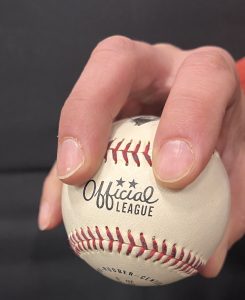
A gyro fastball? I had never heard anyone describe a fastball that way. But the spin pattern made sense—it was the natural result of my preferred grip, with two fingers across a single seam of the baseball. This “revolutionary” pitch wasn’t manufactured. It emerged from the way I already threw the ball, a philosophy Terra Sports leans into: build from the athlete’s natural movement, not against it.

I had come to Terra Sports for a throwing assessment—to evaluate the state of my mechanics and, more importantly, my arm health. About twenty years ago, I dislocated my shoulder delivering a “successful” chop block during a college football game. I did my job on the run play that gained a few yards, but I could have done without the defender falling onto my right shoulder with his full body weight.
Within a few weeks, I had rehabbed enough to return to the field. Still, the aftermath lingered. There was occasional clicking in the joint and a quiet apprehension during certain arm movements that lived in the back of my mind ever since. That old injury, a spring training road trip, and a desire to sharpen my pitching analysis eventually led me to reach out to the independent baseball training shop in northern Phoenix.
“A lot of what mechanics looks like is what the body is comfortable with…and when it’s not comfortable, it’s not going to do certain movements.”
Daniel Tyler, Co-Founder & Pitching Director at Terra Sports

The throwing assessment offered a brief window into the earliest stage of a player chasing the game’s highest levels, when the dream still feels uncertain. After warming up with a few dozen weighted plyo balls thrown into a net and arm-rotation work, I realized something quickly: I had no real idea how to prepare for serious throwing. Tyler, meanwhile, kept feeding me baseballs while filming each throw to capture the current state of my delivery.
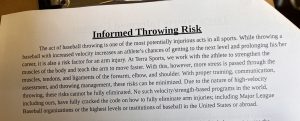
The Informed Throwing Risk waiver brings to reality the potential harm from throwing a baseball.
When we reviewed the video together, the first thing he focused on was my arm action. Specifically, the relationship between when the arm reaches 90 degrees and when the front foot strikes the ground. That timing can reveal whether a pitcher is early or late. I was early and catapulting the ball with a high release.
If a pitcher is late, the arm continues rising even after the front foot has already planted. That delay puts extra stress on the elbow and shoulder compared to an arm that is already at 90 degrees when the foot lands. Being late can also rob a pitcher of velocity—the arm has less time and distance to generate force before releasing the ball.
From there, Tyler examined how effectively I used my lower half to generate power and how efficiently my hips rotated through the delivery. Each observation helped the staff evaluate both efficiency and injury risk. This was all before we considered TrackMan data or practicing drills that would clean up my mechanics.
Terra Sports emphasizes the unique components of each athlete’s throwing motion. Their philosophy starts with anatomy: understand how the body moves before trying to refine the pitch.
“We’re going to get your body to throw how your body wants to throw.”
Andrew Schaner, Co-founder & Director of Strength and Conditioning at Terra Sports
After hitting the low 50s on a few throws in their pitching well, it was time for a body assessment to determine where my 47-year-old frame could improve. Andrew Schaner, Co-Founder and Director of Strength and Conditioning, guided me through a series of simple arm and leg movements. The results were revealing.
Schaner identified tight hip flexors, poor internal hip rotation, and limited range of motion in my previously injured right shoulder. He also noticed a compensation pattern in my left trapezius and latissimus dorsi—likely the result of spending countless hours hunched over a laptop each week. One exercise he pointed to was the lat pulldown. By focusing on keeping my left shoulder down throughout this movement, I could begin correcting the imbalance.
If I were to continue training with Terra Sports, their priority would be restoring mobility in those restricted areas before revisiting my mechanics. The idea is that hidden within inefficient movement patterns lies an athlete’s natural, healthy throwing motion. My arm slot, velocity, and pitch grips would all be managed eventually. First, the anatomy had to cooperate.
The drills would focus on helping my body experience the sensation of being loose and open, with the hope that those patterns would carry over naturally to the mound. Learning movement this way gives the athlete more agency rather than forcing everyone into the same mechanical blueprint.
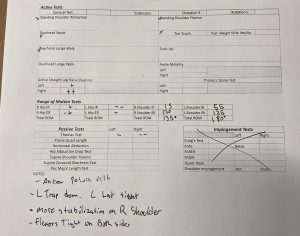
Body assessment reveals areas to improve
As you may have already guessed, I am not a major league pitching prospect. Frankly, I might struggle to claim the last spot in a Little League rotation. Yet if I were on the path to making baseball my career, I would likely make my way to one of the countless independent training facilities like Terra Sports scattered across baseball-loving counties in this country. I would be joining the scores of players scouring every angle available in search of even the smallest competitive edge.
The New Science of Pitching: How Biomechanics and Private Training Are Reshaping Player Development
Even for fans far removed from a practice field, it is apparent that baseball training has changed dramatically. Major league pitchers repeat their throwing motion at least 8,000 times per year in warm-ups, long toss, bullpen sessions, as well as in the game, and they do it at maximum intensity. Under the highest competitive stress at such volume, it is imperative to refine mechanics to their most efficient state. The way many of us were told or not told how to throw a fastball decades ago bears little resemblance to how pitchers are developed today.
Baseball is now in the midst of a technological boom. High-speed cameras, motion-capture systems, and advanced tracking technologies have infiltrated nearly every layer of the game, from elite training facilities down to youth development. As these tools spread, they are reshaping how pitchers are evaluated, trained, and ultimately understood. Modern development no longer centers only on results; it increasingly focuses on how the body moves to produce those results.
From Results to Function: The Rise of Pitch Metrics
Today’s pitching analysis revolves around underlying movement characteristics — extension, spin efficiency, spin axis, induced vertical break, arm angle, release height, and vertical approach angle. Using high-speed cameras and motion tracking will also reveal body angles, torque, and degrees of rotation, among other variables. These descriptors illuminate how a pitch behaves rather than simply what happened after it crossed the plate.
Outcomes still matter, but they are no longer the sole lens through which pitchers are assessed. A pitcher with mediocre results may possess elite underlying traits, suggesting they are only a mechanical adjustment or pitch-design tweak away from a breakthrough. In this sense, modern pitching evaluation increasingly resembles engineering: identifying inefficiencies in a system and optimizing them.
Yet numbers alone cannot explain pitching. Data describes performance; biomechanics explains it. To truly improve, pitchers must translate abstract metrics into physical movement patterns that their bodies can repeat at game speed.
The Expanding World of Private Pitching Development
As understanding of pitching mechanics has deepened, so has the ecosystem surrounding player development. Beyond team coaching staffs, almost all pitchers at nearly every level now work with independent specialists — biomechanics analysts, strength trainers, mobility experts, and pitch-design consultants.
This corresponding training infrastructure is visible in regions dense with a strong baseball culture. A simple search in the Bay Area reveals dozens of specialized pitching and strength facilities. For motivated athletes, opportunities to refine mechanics and velocity are limited less by access than by commitment and resources.
Alongside the game’s growing obsession with pitch design and biomechanical nuance, training methodology has evolved in parallel. Modern programs now approach pitcher development as a fully integrated system rather than a collection of isolated lifts. Strength work is organized to distribute stress across the entire kinetic chain while also targeting the specific ligaments, tendons, and stabilizing musculature that govern the throwing motion. Facilities such as the Summers Method in Clearwater, Florida, exemplify this shift, promoting training environments that prioritize movement quality, joint integrity, and transferable athleticism over traditional weight-room benchmarks.
Thomas Summers illustrates this philosophy in a session titled “Train Like an MLB Pitcher: Bulletproof Upper Body Lift”. Athletes progress from a dynamic warm-up into clustered exercise blocks that blend familiar patterns with subtle constraints or directional loading changes. Medicine-ball work anchors much of the session: single-leg balance throws, rotational wall drives, and crow-hop releases that allow pitchers to accelerate and decelerate load through space in multiple planes. Conventional lifts appear as well—variations of bent-over flies or rows—but are paired with resisted band patterns that demand trunk control and rotation, often against a pivoting load that mimics the torsional demands of pitching. The emphasis is less on absolute force production than on sequencing, posture, and the ability to stabilize under motion.
Isometric work (think static holds for 5-10 seconds or more) reinforces that intent. Movements are frequently coupled with position-specific holds designed to build strength at joint angles pitchers actually inhabit on the mound, all while minimizing unnecessary tissue strain. The sessions may look restrained compared to maximal lifting programs, but that restraint is deliberate: pitchers aim to peak in explosive output during competition, not in the weight room. The cumulative effect of greater cardiovascular capacity, refined neuromuscular control, and expanded functional range of motion translates to more efficient movement patterns and, ultimately, more resilient performance on the field.
This shift reflects a broader change: player development is no longer centralized within teams. Instead, it has become individualized, with athletes assembling personal development networks tailored to their needs.
How Modern Training Transforms Velocity & Mechanics
One of the clearest examples of this new approach is the transformation of a collegiate NAIA pitcher named Ethan, who trained with Tread Athletics and increased his fastball velocity from 89 mph to 98 mph in ten months.
Initial analysis by Ben Brewster, Co-Founder of Tread Athletics, showed an inefficient delivery. Ethan lacked forward drift in his leg lift, opened his front side early, and used a long, rotational arm action that forced late compensations in his upper body. Because he began training during his competitive season, early interventions were intentionally minimal: simple plyometric drills to improve arm relaxation and linear movement without disrupting performance. Even these small changes produced immediate gains, including a new velocity personal record.
Once Ethan’s season ended, training intensified through structured velocity phases. Key breakthroughs came from shortening his arm path using an elbow-driven cue and aligning his mechanics with his natural preference for internal rotation in both shoulder and hips. Pull-down throws and overload/underload ball work allowed him to experience higher velocities safely, pushing him into the mid-90s. Later, introducing lateral torso tilt and more explosive lower-half movement created a more linear, powerful delivery. Ethan’s velocity floor rose first — sitting near 90 mph — before his ceiling jumped into the upper-90s.
The transformation culminated during an in-person training visit, where Ethan sat at 96 mph and touched 98 in a bullpen session while still throwing strikes and demonstrating quality secondary pitches. Notably, most of these gains occurred through remote coaching, with constant video feedback and disciplined execution of strength, mobility, and nutrition programming. A previously overlooked college pitcher had become a legitimate professional prospect.
Why Velocity Gains Are Possible: The Physics of Deceleration
Stories like Ethan’s are striking, but they are grounded in biomechanics. One insight that has become more familiar to me is how much of modern pitching training involves what happens immediately after the release of the ball.
At release, a pitcher effectively unloads a five-ounce weight that had been accelerating to extreme speed. The body must then decelerate the arm almost instantly, dissipating the kinetic energy generated to throw 90–100 mph. The posterior shoulder musculature bears enormous responsibility here, stopping an arm that had been internally rotating at roughly 7,000–9,000 degrees per second. Simultaneously, the elbow experiences intense valgus stress: the ulnar collateral ligament is pulled taut while forearm muscles generate counter-torque to stabilize the joint.
In other words, two highly vulnerable joints experience peak loads at the same moment. Proper mechanics, strength, and deceleration capacity determine whether those forces are safely absorbed or translated into injury. This perspective reframes velocity training: throwing harder is not merely about moving the arm faster, but about safely managing the forces created by the entire kinetic chain.
Early Innovators and the Modern Training Philosophy
Long before biomechanics became mainstream in baseball, independent training centers were already experimenting with methods to strengthen both acceleration and deceleration phases of throwing. Early videos from Driveline Baseball in 2009 show unconventional tools — weighted baseballs in socks, mini-trampolines used to rebound six-pound plyo balls — designed to develop posterior shoulder strength and force absorption capacity.
“Driveline, I think the greatest attribute that they have brought to the game was just kind of an evidence-based, data-driven methodology to develop it.”
Craig Breslow, Boston Red Sox General Manger, in part 1 of a four part series by Christopher Smith
These drills reflected a holistic philosophy: improving performance by strengthening the entire movement system rather than isolated muscles. Modern pitcher training now routinely integrates mobility work, medicine ball throws, plyometrics, isometric strength, and pitch-design sessions into unified programs. The goal is not simply velocity, but efficient, repeatable, and resilient movement.
The Biomechanics Era of Player Development
The growing emphasis on biomechanics is reshaping baseball at institutional levels as well. Major League Baseball has begun moving toward standardized motion-capture and tracking technologies across organizations. While implementation costs remain significant, the direction is clear: movement data is becoming foundational to both performance optimization and injury prevention.
Organizations that fully integrate biomechanics into development pipelines gain a clearer understanding of how pitchers generate and absorb force. Those who lag risk higher injury rates and slower skill advancement. The competitive edge in pitching development increasingly lies not in discovering new drills, but in applying biomechanical knowledge systematically.
Rethinking the Role of Coaching
Players themselves must be fully invested—not only in the outcomes they produce, but in the relentless pursuit of making their physical preparation the best in the world. The margin for error at the highest level is razor-thin. There are roughly 150–180 starting pitchers in Major League Baseball at any given time, accounting for about 15% of the players occupying the thirty 40-man rosters.
Zoom out across the full professional pyramid, and the exclusivity becomes clear. With roughly 30 players at each of the five levels in every organization, there are about 4,500 players in affiliated professional baseball overall. MLB starting pitchers, therefore, represent no more than the top 3% of all professional players in the sport.
Even within an already elite population, the major-league starter sits at the extreme tail of performance. Reaching and staying in that group demands not just talent and experience, but total immersion in the process of physical and technical refinement with as much support as possible.
As private training ecosystems expand, they also raise questions about traditional team structures. Professional organizations employ multiple pitching coaches and, at times, “sport scientists” across levels, yet many players simultaneously rely on external specialists for individualized guidance. For ambitious athletes, development has become a continuous process extending far beyond team facilities.
The Rise of Remote Coaching
Although many players were first introduced to modern throwing instruction through high-profile coaches like Ron Wolforth at the Texas Baseball Ranch, my own earliest exposure to structured baseball training came from the ubiquitous infomercials for Tom Emanski drills on VHS. Instruction has since migrated almost entirely online. An insightful contemporary voice is former minor leaguer Josh Gessner, who uses social media to document his ongoing pitching journey.
For 2026, Gessner has laid out an ambitious roadmap back to affiliated baseball, anchored by a clear benchmark of reaching 100 mph. What makes his content resonate is its accessibility. Without leaning on dense jargon, he breaks down complex movement concepts—pelvic rotation, lateral extension, and stride direction—into cues that are actionable for athletes with sufficient proprioceptive awareness. His training logs show a familiar but telling blend of max-intent throws, medicine-ball sequencing, strength work, weighted-ball protocols, and mobility circuits. The through-line is efficiency: refining how force moves through the body so that more of it arrives at release.
Day 4 of training to get drafted
Recently, I was talking to a friend of mine who throws 100 mph.
At one point, though, his velocity dropped down to 93–94.
Eventually, he built his way back up to throwing 100 again.
I asked him, “What was the biggest thing that helped you… pic.twitter.com/7UHiVQ7196
— Josh Gessner (@joshgessner) January 6, 2026
One January 2026 post captures this philosophy succinctly. After speaking with a peer who had already reached triple digits, Gessner highlighted a shared mechanical feel: maintaining more load over the back leg while creating an aggressive side bend before unwinding toward the plate. The implication mirrors what motion-capture labs have demonstrated for years—the arm is not the engine of velocity but the final link in a ground-up kinetic chain. Each pitch resembles a maximal plyometric effort off the rubber, making jump variations and explosive lower-body training logical complements to throwing. Talent and experience still matter, but the modern developmental edge lies in iterating relentlessly on movement quality, with no segment of the delivery left unexamined.
This decentralization does not diminish the importance of coaches; rather, it changes their role. Coaches increasingly coordinate, interpret, and integrate diverse streams of information — biomechanics data, pitch metrics, strength outputs — into coherent plans. The modern pitching coach is as much an analyst and systems designer as they are an instructor.
How to Throw a Fastball
From what you can see above, there are countless permutations of adjustments a player can make to improve both their mechanics and the outcomes of their pitches. Often, meaningful gains come from surprisingly subtle tweaks.
For me, improving my fastball starts with a few simple cues. My loading leg could use more depth and better balance as I coil back. Tyler suggested the cue “ball of the foot,” a reminder for pitchers to stay athletic and grounded during the loading phase. That back leg is critical—it sets up the hip rotation that ultimately drives velocity and efficiency during the unloading phase.
Working on an article “How to Throw a Fastball” out next week.
I visited @TerraSportsAZ to get a throwing assessment. In 1 hour they helped me build a lethal new pitch…
The Gyro Fastball
Ha! Thank you to Daniel & Andrew for your time & expertise!
A few ways I could improve> pic.twitter.com/drbQhtz7Nj
— YGM Fantasy Baseball (@YGMfantasy) March 6, 2026
Another common cue is to “hold it back.” In my case, I’m trying to mimic the extreme coil used by Jonah Tong, bringing my raised leg farther back to load more torque into the windup. The phrase “hold it back” reminds pitchers to keep the torso closed as they begin driving toward the plate. Doing so allows the body to store energy and unleash maximum rotation after the front foot lands.
At the end of my delivery, I was opening up too early, which diffused much of that stored energy and forced my shoulder to do extra work just to get the ball to the plate. If I can stay sideways for longer during the motion, I should be able to tap into more power from my lower half.
If I were able to clean up those mechanics and restore some lost range of motion, only then would it make sense to move on to more nuanced elements like pitch grips, foot placement, or more complex body positions. The gyro fastball didn’t get built in a day, and boosting my radar-gun readings beyond 50 mph would require more than a single visit. It would mean returning regularly and generating new intuitive habits of motion step-by-step over many months.
The Future: Individualized, Data-Driven, Biomechanical
Modern pitching development sits at the intersection of technology, biomechanics, and individualized coaching. The transformation of pitchers like Ethan demonstrates how targeted mechanical adjustments, informed by movement science and supported by comprehensive training, can dramatically alter performance trajectories, such as in “The Matt Ager Project” described by Bruce Crider, Driveline’s High Performance Coordinator.
The @mattager1 train ain’t stopping.
A better athlete, better thrower, and better pitcher than he was 4 months ago.
Time to go show it off where it matters. https://t.co/OMeO9a5RGq pic.twitter.com/R5PkNXM8EH
— Brice Crider (@Crider_HP) February 13, 2026
What once relied on generic instruction and repetition now resembles applied human engineering. Every element of the delivery — from ground force to trunk rotation to arm deceleration — can be measured, trained, and optimized. As this knowledge continues to spread, the boundaries of velocity and durability will likely expand with it.
Ultimately, pitchers are unique human beings, each with their own physical traits and movement patterns. It’s worth remembering just how difficult it is to reach the major leagues—and even harder to stay there. For all the advances in science and data that have pushed training closer to its modern peak, players still have to execute those learned commands in mere milliseconds, at the highest level imaginable.
“What we try and do…get each athlete into specific positions…so that they can use their body better and create better feelings rather than get too technical, because we still want them to be athletes.”
Daniel Tyler, Co-Founder and Pitcher Director at Terra Sports
Training can sometimes drift toward the formulaic, but as Daniel Tyler puts it, “we can’t get too technical, because we still want them to be athletes.” The implication is clear: athletes aren’t highly coded robots whose inputs reliably produce predictable outputs. Even with all the data and instruction in the world, the pitcher still retains the independence and the freedom to throw the fastball any way that works for their body.
