





The Hall of Fame won’t call Lou Whitaker’s name Dec. 7, when it announces results for the 2026 Contemporary Baseball Era ballot.
Sometimes, when the system fails, it just keeps on failing.
The great Detroit Tigers second baseman did not even appear among the eight names on the ballot this time. Barry Bonds, Roger Clemens, Carlos Delgado, Jeff Kent, Don Mattingly, Dale Murphy, Gary Sheffield and Fernando Valenzuela are up for election. They’re a reasonable group, certainly worthy of discussion and debate. Whitaker, whose relative accomplishments were greater than all of them outside of Bonds and Clemens, should be among them. In fact, he should be ahead of them and already in Cooperstown. But the next time Whitaker could be included on a ballot, provided the rules don’t change again beforehand is in 2028 for the 2029 class.
No matter how or when the voting happens, Whitaker objectively has one of the best Hall of Fame cases of any Major League Baseball player not already there. By multiple measurements, he’s one of the 10 or so best second basemen of all time, and one of the 75 or so best position players ever. Whitaker might be the single most deserving player of anyone born after 1900 who also doesn’t have an extenuating circumstance, like a PED or gambling scandal, a domestic violence arrest or credible allegations, or however you want to characterize Curt Schilling.
Whitaker, or possibly Bobby Grich, have the best cases. What is it about second basemen?
Now 68 years old, Whitaker has been given two distinct elections to reach Cooperstown. In 2001 shortly after he retired, a collection of baseball writers denied Whitaker and, 20 years later, an oversight committee that included some of Whitaker’s peers made the same… oversight. Disappointing decisions, to put it diplomatically, by different groups.
Whitaker fell off the BBWAA ballot after 2001 because he got just 15 votes on 515 ballots for 2.9%. Anyone under the 5% threshold gets chopped. For context, the ’01 vote put Dave Winfield and Kirby Puckett in the Hall, and the ballot also included eight additional future Hall of Famers, along with Mattingly and Murphy. It was a stacked bunch of talented players, in part because the BBWAA, historically, is deliberate and conservative about who it lets into the Hall of Fame. Sometimes really conservative. But no matter how thick the ‘01 ballot was, Whitaker deserved much more thorough consideration than he received.
In defense of voters at the time, measurements like WAR had not taken hold as widely, and resources like Baseball Reference had just come along. It might not have been common, but it was possible, late in 2000, for a Hall voter to go online and compare Whitaker to others using a wide array of information. They could go to Baseball Reference and check Bill James‘ Hall of Fame monitor and standards, which gives a thumbnail sketch of which players tend to meet the benchmarks and expectations of those in Cooperstown already. It’s a lot easier and more practical to do the legwork today. Still, that’s just an excuse.
Whitaker’s career statistics don’t scream “Hall of Fame,” but they do say it in a firm, elevated and confident tone. A second baseman, remember, he slashed .276/.363/.426 with 244 home runs and 143 stolen bases. Among all players, he’s 100th all time in runs scored. Whitaker finished with 2,369 hits but also had 1,197 walks (64th all time), making him 92nd overall for career times reaching base. He walked more than he struck out in 9,967 plate appearances, which should get analytical stat hounds and old-schoolers alike excited.
Whitaker was voted the best hitter at his position four times, and three times as its best fielder. He made five All-Star teams and scored six runs in five games in the 1984 World Series, helping the Tigers win their only championship since humans walked on the moon. Apologies to the late Dick McAuliffe, their second baseman in 1968.
At FanGraphs, Whitaker ranks ninth all time in WAR among second basemen, and there are 20 players at that position in Cooperstown. His fWAR is higher than that of Craig Biggio, Roberto Alomar, and Ryne Sandberg. Jay Jaffe’s WAR scoring system, a formula devised to measure peak performance and filter out what some might call stat compiling, ranks Whitaker as the No. 13 second baseman of all time, higher than 11 second basemen already in Cooperstown. See the complete rankings at Baseball Reference.

This is a good way to look at Whitaker’s candidacy: If the Hall of Fame were an actual league with real games, Whitaker would be league average. This is one time when being in the middle of the road should not get you run over.
After the BBWAA passes its judgment, players historically have gotten additional chances with various iterations of oversight committees. They used to be called things like the Veterans Committee, but the groups now include a few folks from other walks, like executives and media. Whitaker’s only committee vote so far came in 2020, when he got six of 16 votes (12 are needed). Catcher Ted Simmons and MLB players union pioneer Marvin Miller got elected that season. Limiting him to just one BBWAA ballot in ’01, and keeping Whitaker out of play for oversight committees for two decades, weakened the opportunity for meaningful discourse related to his Cooperstown candidacy. Ever since, all anyone has been able to do about it was complain in a column, snipe in the comments section, or blurt something in an online chat.
Compare Whitaker’s trek to that of shortstop Alan Trammell, his Tigers teammate who spent 15 straight years on the BBWAA ballot until 2016. Trammell received 41% of the vote in his final BBWAA season before being handed over to the Classic Baseball Era committee (the names, faces and other details of these committees are tweaked frequently). Trammell’s timing was perfect, finally. The next summer, the Hall of Fame inducted him and teammate Jack Morris. No doubt, Trammell remaining viable on BBWAA ballots helped him get a fairer shake by the committee. And while he was World Series MVP in ’84, an accomplishment Whitaker couldn’t match, and Trammell played a tougher position on defense, the rest of his career was not better than Whitaker’s. If you want to pick nits, Whitaker should have gone into the Hall first.
Trammell lamented this in a ceremony in 2022 marking the retirement of Whitaker’s uniform No. 1, saying: “For four years, I’ve been uncomfortable. I have been extremely honored and grateful to have my No. 3 retired. But there wouldn’t be a No. 3 on the wall without the No. 1.”
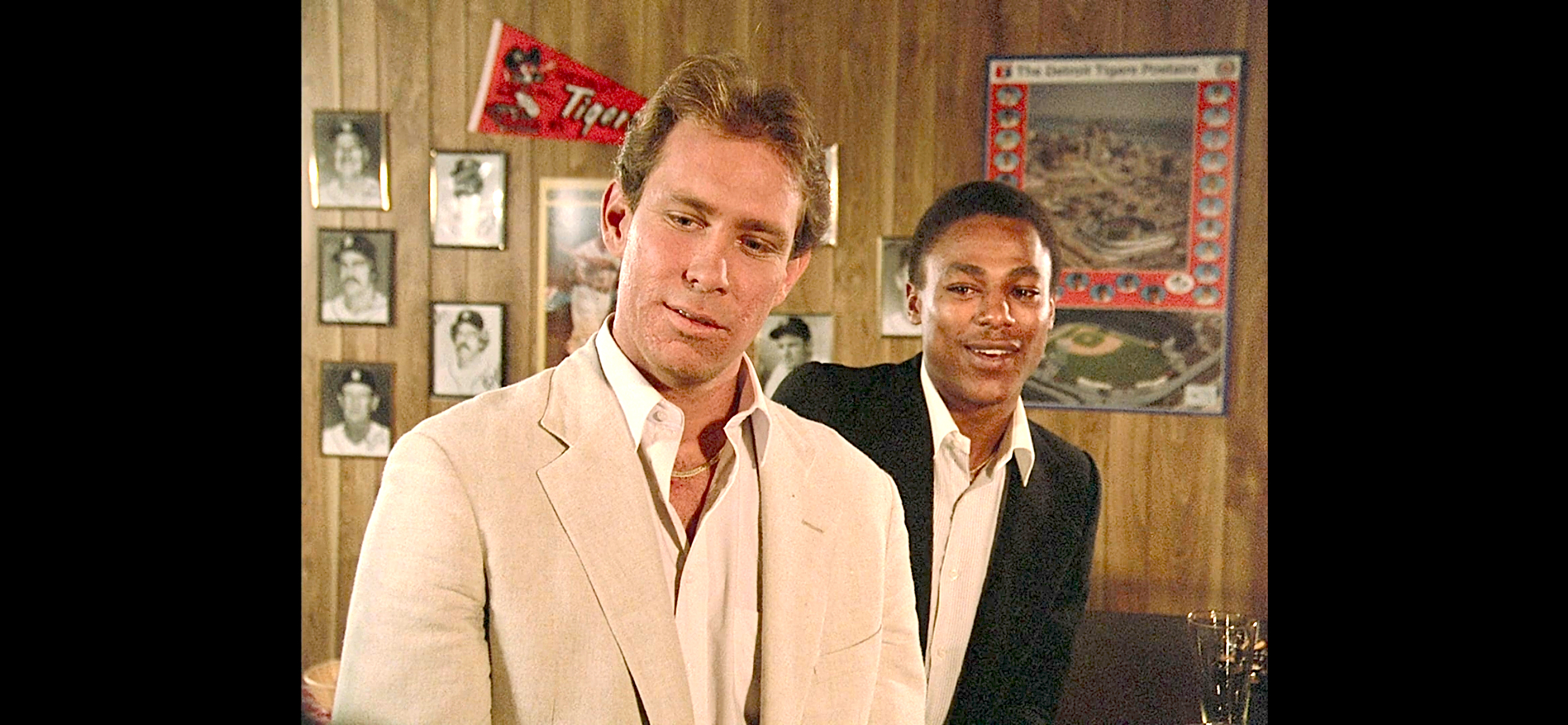
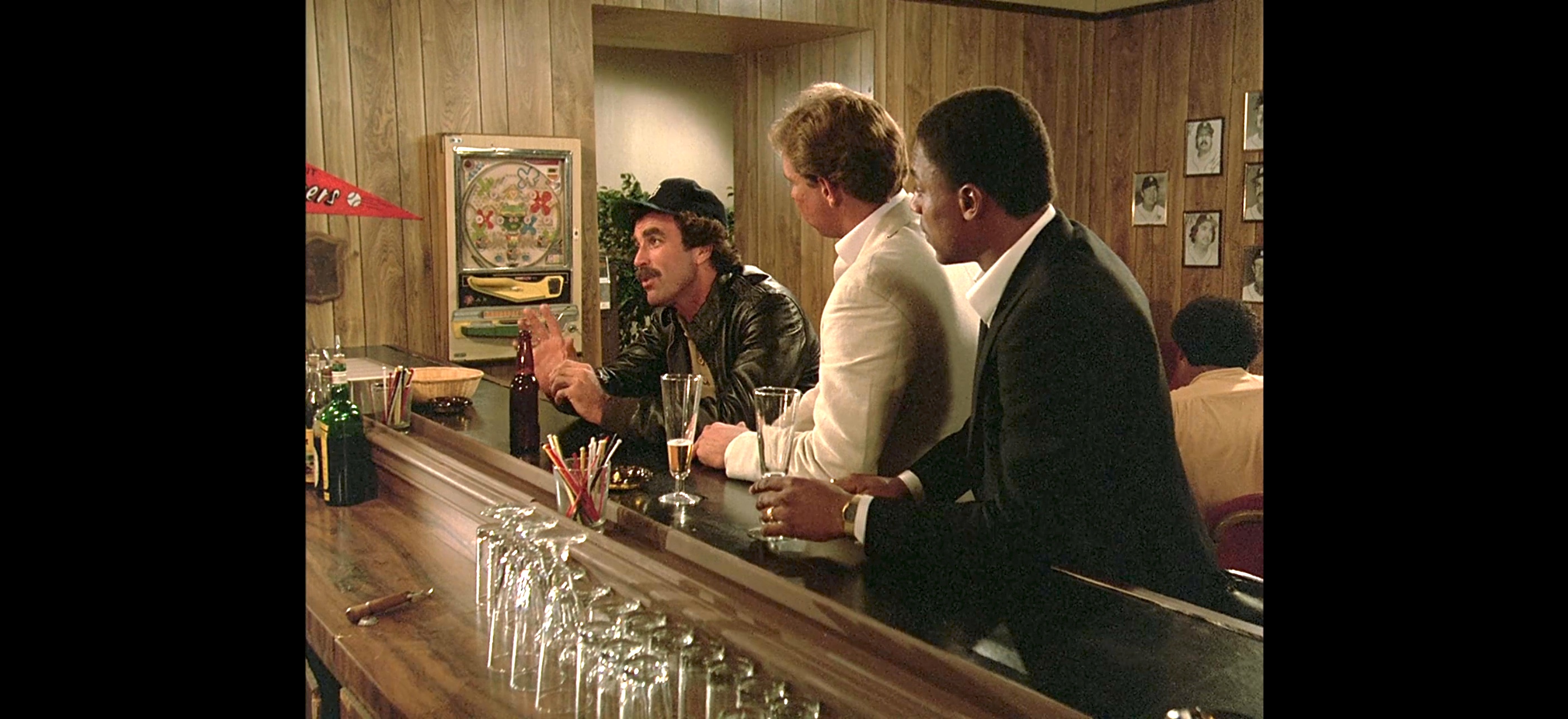
Trammell and Whitaker go well together. On the field, in the Hall of Fame, in a 1983 episode of “Magnum, P.I.”
The reality of performance-enhancing drugs has affected the reputation of every major-leaguer, even ones like Whitaker, who never has been suspected of using them. Whitaker’s name didn’t appear in the Mitchell Report, or on a positive drug test that anyone has produced. He didn’t testify before Congress. Whitaker’s reputation for clean living, something he really had, preceded him. A presumed presence of steroids in the league helped to create bloated stat lines, or at least the appearance of them. Assuming that Whitaker was clean when others weren’t, his résumé might look ordinary by degree. Voters and analysts since the 1990s haven’t always accounted for this, no matter if it’s on the hitting side or the pitching side.
The other thing, which is less speculative but clearly present: The PED era has resulted in an unprecedented and recurring backlog of nominees. A lot of them were better players than Whitaker, even if they also made for worse candidates, varnished by the presumption they cheated. Still, they won’t go away. Look no further than Bonds and Clemens, two of the players on the current Contemporary Era ballot. Neither received much committee support when they previously appeared on a similar ballot in 2023, when slugger Fred McGriff won by unanimous selection. Will Bonds and Clemens gain traction this time? Even if they don’t, they’re still a problem.
The Hall of Fame will announce the members who compose the committee Dec. 1, but even with holdovers, they are bound to be mostly different individuals than in 2023. Even if Bonds and Clemens don’t get in, they’re still among the very best players ever, and their careers deserve to be argued for a spot in the Hall. A new committee will, or should, consider them thoroughly. If Clemens and Bonds aren’t voted in again, they’re in position to be passed to the next Contemporary Era committee in 2028, which could block Whitaker again, when he’ll be in his 70s.
A new wrinkle: Starting with this election, if a player gets fewer than five votes out of 16, they get one more shot on another ballot after skipping a cycle. If poor results repeat, they’re off future ballots in perpetuity. All of this is subject to change, but imagine yourself on a committee where you might decide to, essentially, ban Barry Bonds from the Hall of Fame forever. You don’t want that pressure. And no matter how the votes go, Bonds and Clemens are going to suck up energy that could be devoted to borderline players like, say, Mattingly or Sheffield. Round and round they all go.
Here’s a prediction: Bonds, Clemens and others like them don’t get into Cooperstown soon, but they stay viable on the ballot long enough to be a drag on everyone else.
And, because everyone is wondering: Expect to see Pete Rose on the Classic Baseball Era ballot in 2027 for the 2028 ceremony. This is for players whose careers occurred mostly before 1980. MLB Commissioner Rob Manfred recently commuted Rose’s sentence for gambling on games in which he played and managed, posthumously removing him from the permanently ineligible list in May 2025. Nobody will want the stress of being on Rose’s committee.
As for Whitaker, he must remain as patient for this as he was at the plate. He must and so must Grich, who is No. 8 at fWAR among second basemen, one rung up from Whitaker. Grich also left the BBWAA ballot after one season (in 1992) because he got 2.6% percent of the vote. Has anyone said it yet: “What is it about second basemen?” Grich has all but given up hope for election. Despite being one of the 80 best position players ever, he’s never been reviewed by an oversight committee. His next opportunity could happen with the Classic Era ballot in 2027 that includes Rose.
Grich deserves his own campaign independent from Whitaker, but both of them turning up missing in Cooperstown makes sense, at least for consistency’s sake. They’ve both been wronged. They’re kind of the Ron Santo of their respective position and era. Santo went into the Hall posthumously, which sucked a lot of the joy from the event. For now, all we can do is watch the elections for others to see how the winds might change direction for chronically overlooked ballplayers like Whitaker and Grich.
