





Hello and welcome to week five of using PLA to evaluate pitchers! This series uses PLA, along with other run expectancy metrics, to break down results and better understand the process behind them.
This week, I will be taking a look at three veteran starters off to strong starts in 2026. For some more details on PLA and what goes into PLV scores, be sure to check out Nick Pollack and Kyle Bland’s breakdown here.
Seth Lugo
Seth Lugo has gotten off to a hot start in 2026, pitching to a career-best 2.68 ERA through his first seven starts. After converting from reliever to starter in 2023 with the Padres, Lugo has become one of the more consistent starters with the Royals since.
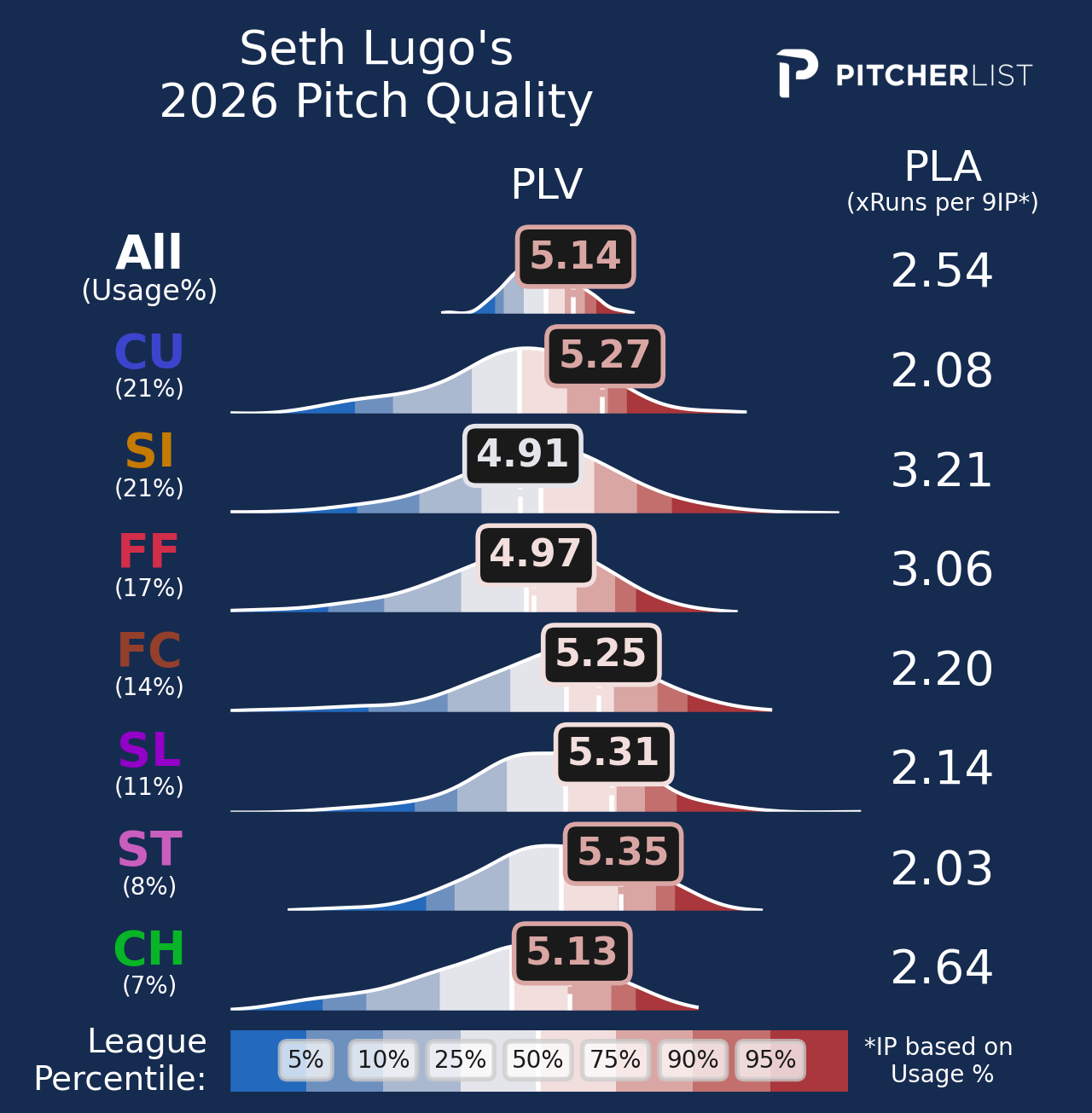
Lugo likely has the deepest arsenal in baseball, with Baseball Savant labeling nine distinct shapes so far in 2026. While Lugo’s underwhelming velocity frequently permits hard contact and struggles to generate whiffs, his low walk rate and uniquely precise command give him endless ways to put away batters.
Lugo has been fairly neutral against righties and lefties thanks to this deep arsenal. Against righties, his sinker leads the way while he uses 5 different breaking ball shapes around 10% of the time each, generating weak contact and avoiding pulled fly balls despite a lower strikeout rate. Lugo strikes out more lefties, thanks to his curveball/four seam’s distinction, but has walked more as well.
This has culminated in a career-best 2.54 PLA for Lugo, a step better than other earned run estimators like xFIP (3.81) and SIERA (4.06). While Lugo’s stuff has looked similarly decent across the board, like in the past, his HR/FB rate has fallen from an unsustainably high 26.5% in 2025 to 3.6% in 2026. This difference has basically cut Lugo’s FIP in half this season with a marginally lower xFIP, a trend suggesting some regression is in order.
Regardless, Lugo has brought his walk rate back down and sustained a fairly average 21.3% strikeout rate. His stuff looks relatively unchanged, and his ability to work deep into games (~6.1 IP/start in 2026) remains. Look for Lugo to limit the long ball while sustaining his unique profile down the stretch in 2026.
Tyler Glasnow
After an injury-riddled 2025, Tyler Glasnow has looked elite through his first six starts in 2026. While his formerly elite velocity has fallen a little closer to league-average, stronger command and comfort throwing two fastballs have helped him sustain elite swing-and-miss (30.3% whiff rate, 32.6% strikeout rate) with a league-average walk rate.
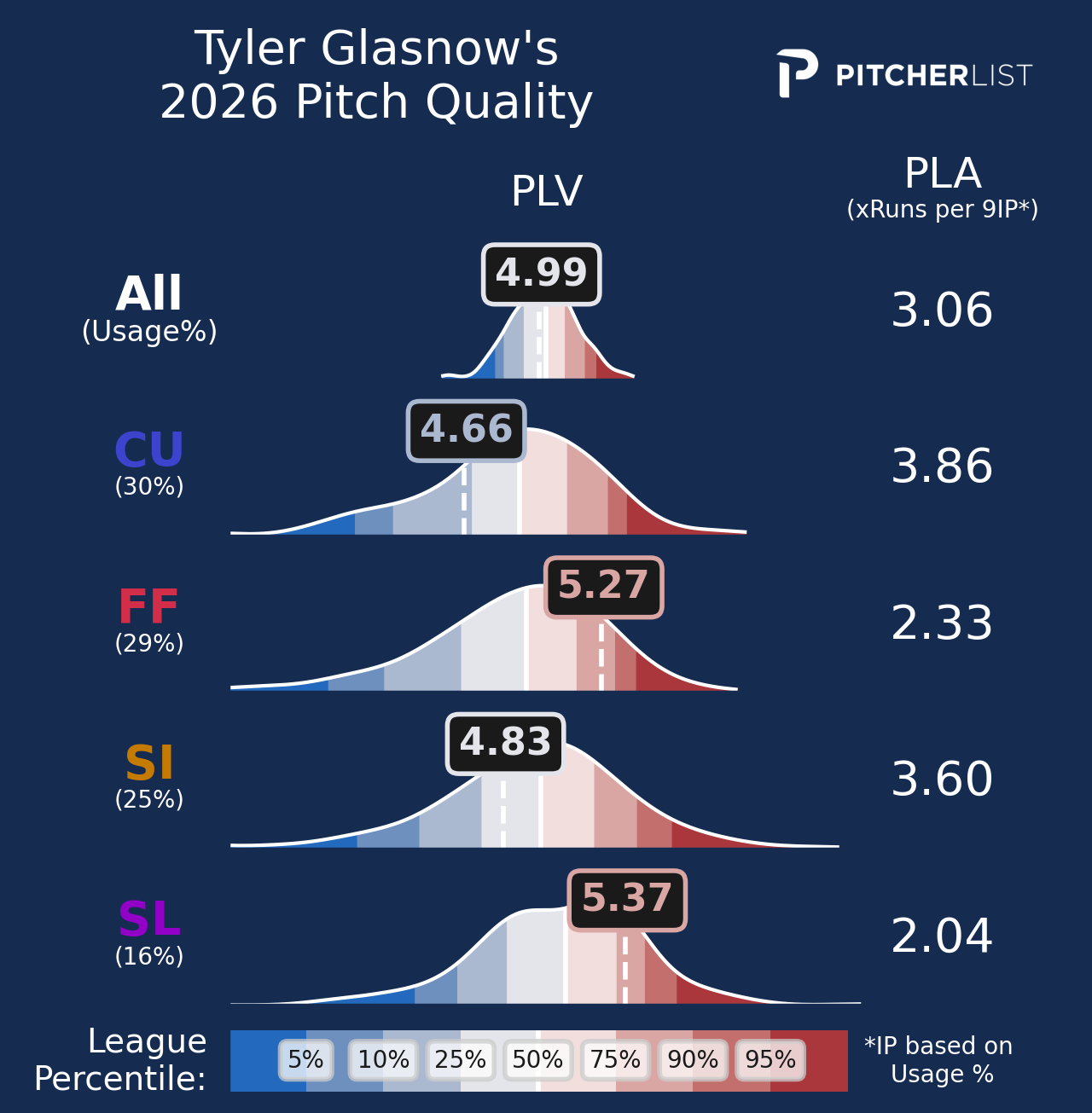
Glasnow’s four-pitch mix leads with the curveball/four-seam against lefties while mixing four pitches equally against righties. However, Glasnow has introduced two curveball variations in 2026, using a slower knuckle-curve primarily against lefties with an elite 46.8% whiff rate and .120 BAA. His traditional curveball has yet to allow a hit while returning a 56.5% whiff rate as well.
However, PLV rates his curveball as below-average, with a 3.86 PLA despite consistently returning plus results. Part of this is likely due to Glasnow’s extreme approach, throwing it in-zone just 30% of the time to earn chases and set up fastballs in the zone. He throws his four-seam in-zone nearly 60% of the time, returning an elite 24.1% called-strike and well-below-average 11.9% whiff rate.
This approach has seriously limited ideal contact, generating just a .188 BABIP. While hitters have historically run low BABIP rates against Glasnow, it is still likely to come up over a larger sample. Still, a 3.06 PLA is firmly above average, and Glasnow’s long-term success will likely come back down to staying healthy and on the field.
Chris Sale
Chris Sale has also been elite in 2026, continuing his impressive tenure with the Braves as a Cy Young-level talent when healthy. Sale’s first seven starts have seen his highest average fastball velocity (95.4 mph) since 2018 and his highest chase rate (36.4%) ever.
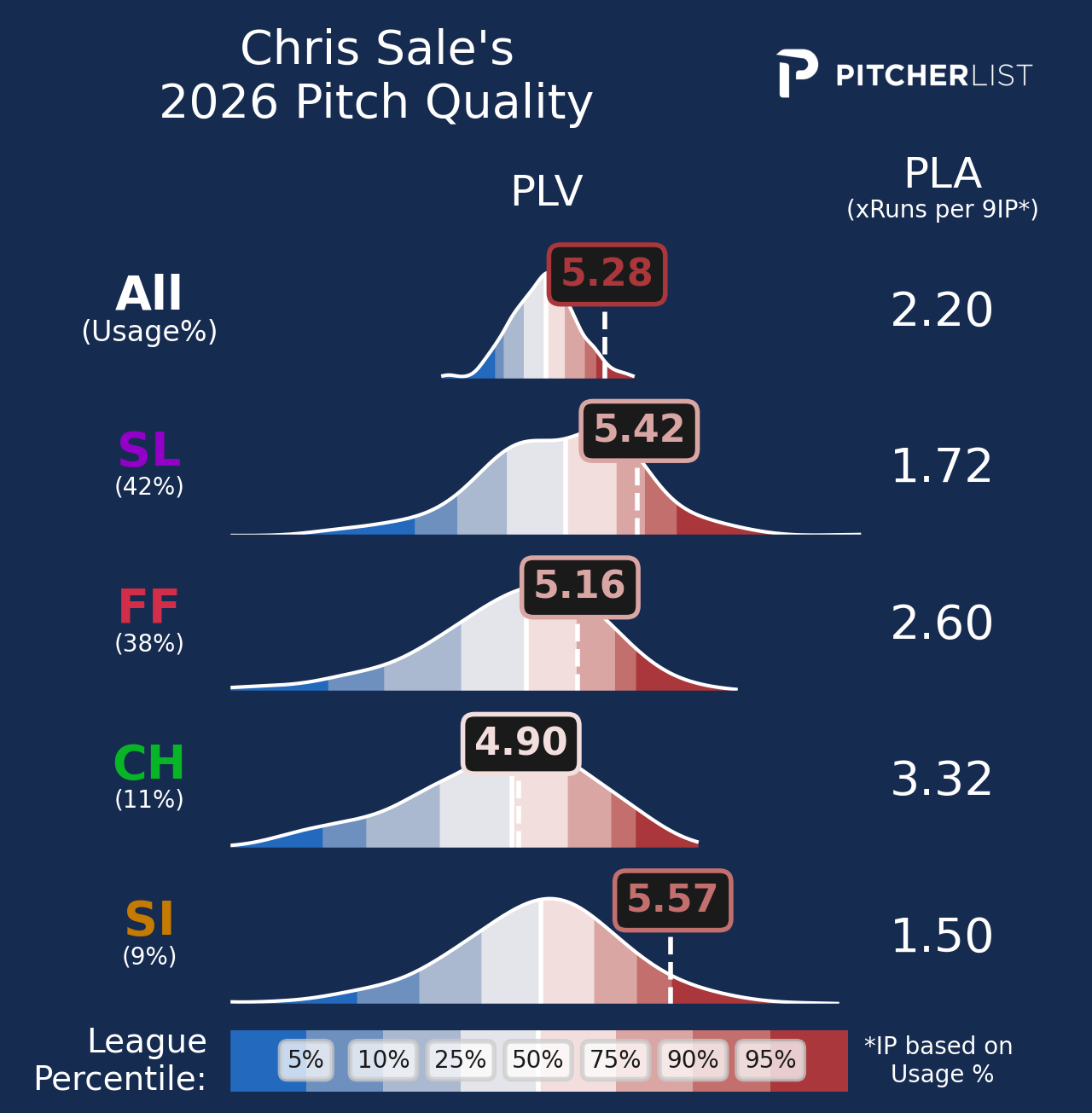
Sale’s elite stuff comes down to his slider and four-seam, both of which induce strong results in generating 48/49 strikeouts and being thrown 80% of the time. However, his changeup has added a third option against righties, while his sinker has become his primary fastball against lefties. Both pitches grade out well thanks to decent stuff and elite execution and command from Sale.
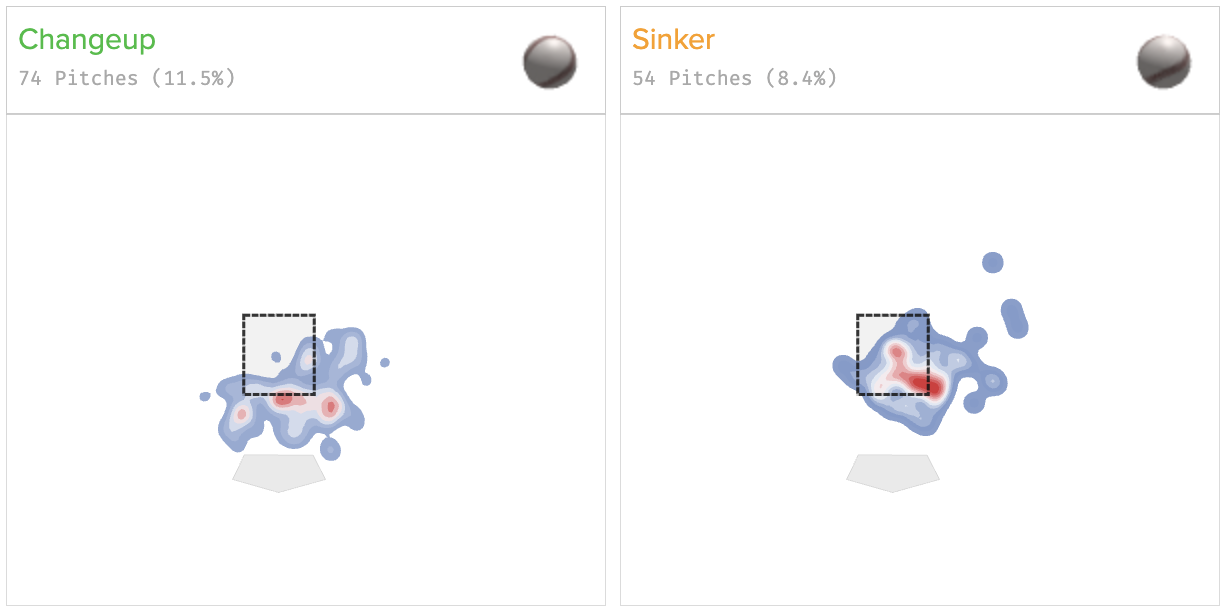
This has led Sale to fairly neutral splits, anchoring an elite Braves pitching staff despite a myriad of injuries. At 37, Sale remains one of the game’s best starters when healthy, yet there are still some minor warning signs for regression.
His 91.4% LOB rate and .223 BABIP are both well below career norms and project to raise his ERA a little closer to his 3.51 FIP/3.28 xFIP. Regardless, Sale’s elite 2.20 PLA is among the league’s best, and his strong stuff remains despite his age and injury history. Look for Sale to remain healthy and sustain his results as one of the league’s premier lefties through 2026.
