





Prospect call-up videos are the eye candy of baseball social media. The semi-choreographed videos typically feature a minor league manager informing a young prospect that his lifelong dream is coming true, either in a personal meeting in the manager’s office or in front of cheering teammates. Legions of fans across social media platforms get to witness the best day of many players’ young lives.
But like most glossy, social media eyewash, the story behind the call-up is a lot more complicated. Some players have imposter syndrome fears of not being ready for the majors. Others feel bittersweet about loved ones who helped make this day a reality but are no longer alive to see it. There are logistics to worry about — wait, does my family have passports to get to Toronto? And not all call-ups are convenient or social media-friendly. Addison Barger received a call at 1 AM while he was playing video games with his roommate, Ricky Tiedemaann. He was informed that a car service would pick him up at 5 AM to take him to The Show. Pack your bags and good luck getting some sleep!
So, in the spirit of the old VH1 show ‘Behind the Music,‘ let’s go behind the call-up from the perspectives of major leaguers and those who helped them realize their dreams, revealing the stories of success, tragedy, and triumph.
Eye of the Tiger — Kevin Gausman
Kevin Gausman was confused. The Orioles had selected the LSU Tigers hurler as the 4th pick, and first pitcher taken, in the 2012 MLB draft. The Orioles invited Gausman to spring training in 2013. Following a strong spring training, the club assigned MLB Pipeline’s #37 prospect to Double-A Bowie. Gausman was off to a great start with the Baysox, posting an ERA near 3 and a K/BB ratio approaching double digits.
So why in the world was the Orioles roving scout in town asking him to work on bunting several days in a row? Gausman was in the American League, where pitchers did not hit. Adding to Gausman’s confusion was his misunderstanding that a player was required to play at every level of the minors before getting called up to the majors. Pitchers did not hit in Triple-A games played by American League teams, but did when two National League teams were playing.
“After the third day, I finally asked her, ‘Why am I bunting?'” Gausman said. “And she said, ‘Well, I might be able to tell you after the game.’ That whole game, I am thinking, What is going on? Am I getting traded? After the game, she told me you are going to Toronto [where the Orioles were playing]. I had my debut in Toronto, and my second start was going to be in D.C. [the National League’s Washington Nationals], and so that’s why I was bunting.”
“I thought you had to go to every level, and so I remember asking, ‘Are you sure I can do this? Can I go to the big leagues from here?'”.
In addition to being stunned, Gausman was concerned, “My first thought was ‘Oh shit, I don’t know if I am ready’. Looking back, I didn’t think I would be called up. In my mind, that wasn’t going to happen that year. It was just too soon for me after getting drafted. So in my mind, I was going to Triple-A. And so when they said I was going to the majors, I was like ‘Oh shit, I gotta figure this out’.”
After calling his parents, Gausman went to a nearby bar with some teammates and celebrated with some shots.
“It was pretty cool,” Gausman said. “As a young guy, that is the moment you dream of, getting that call.”
On the emotional call to his parents, Gausman told them his debut would be in Toronto; they needed to get passports. However, he quickly remembered they had fortunately obtained them the previous offseason for a family vacation to Mexico.
Even with passports in hand, his family still had to get from their home near Denver to Toronto, with a stop in Detroit.
When the Gausmans arrived in Detroit, all flights departing from Detroit were canceled. His mother, Clair Gausman, a former Pac-10 football referee, and father, Winifred ‘Jo’ Gausman, scrambled and drove the roughly four hours from Detroit to Toronto. They were at risk of not making it to Toronto in time for his debut. Bad traffic, an overzealous border patrol agent, or a mechanical problem with the car would mean missing their son’s major league debut.
Gausman was in the dark about their travel woes. His parents were updating his girlfriend (now wife), Taylor North, but she did not want to give Kevin another thing to worry about. Gausman was surprised not to have heard anything from his parents, but Taylor assured him, “They are here; they are good.”
Fortunately, the Gausmans made it to Toronto in time to quickly drop their bags at their hotel and head straight for the ballpark, arriving just before first pitch.
“I still remember we had the whole first row above the first base dugout,” Gausman shared. “It was all my family. My brother, my sister, my mom, my dad, like everybody, was there, and it was something I will never forget.”
Despite his initial concerns, it is safe to say Gausman ‘figured it out’. He has finished in the top ten of Cy Young Award voting three times, has been selected as an All-Star twice, and has tallied over one hundred career wins and counting. He currently fronts the rotation for the first-place Blue Jays as they head towards the playoffs.
Don’t Stop Believin’ — Davis Schneider
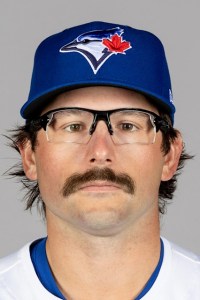
Photo credit – MLB.com
Davis Schneider was discouraged. After being drafted as the 849th pick in the 2017 MLB draft (28th) out of Eastern Regional High School in Vorhees, NJ, Schneider had spent his first two years of professional baseball in rookie ball. In his third season after a hot start with Bluefield in West Virginia, Schneider was promoted to Low-A Vancouver.
Things did not go well. In a small sample of 55 at-bats, Schneider hit .145//273/.200 for a 473 OPS.
“He struggled, and he was on the bubble of getting released,” shared Davis’s manager in Vancouver, Casey Candaele. “They were thinking, ‘Is he someone we want to keep or not?'”
A 28th-round pick getting released would not have been unusual. The odds of a 28th-round pick making the majors were very slim; so much so that in 2021, the draft was shortened to twenty rounds. But Dave Roberts was a 28th-round pick, and he changed baseball history.
So you are telling me there is a chance.
Like all minor leaguers, Schneider lost a year in the minors in 2020 due to COVID. And then in November of that year, tragedy struck the Schneider family. Davis’s older brother, mentor, and best friend, Steven, tragically died at age 26 of an accidental drug overdose. Despite facing his own challenges with mental health and addiction, Steven played a significant role in shaping Davis’s positive outlook and optimism, which ultimately helped him reach the major leagues. He provided both encouragement and the tough love typical of an older brother—often calling Davis a “wimp” or worse whenever he would sulk.
Schneider was limited to just 49 games, primarily at High-A, in 2021, but added some power, slugging a career best .464 with nine home runs. He continued adding strength and power in 2022, belting 16 home runs in 2022 and ending the year with 17 games at Triple-A Buffalo.
Schneider’s defense had also improved, perhaps in part due to a new glove he found in the lost and found at a baseball training facility he trained and coached at during the offseason. The glove had belonged to former major leaguer John Vukovich (‘VUK’ was inscribed in the glove) and had been sitting in the lost and found for nearly 18 months when Schneider picked it up and began using it.
Offense, though, had always been Schneider’s calling card, and he continued to improve in 2023 with 21 home runs in 87 games with Triple-A Buffalo. Candaele was once again his manager, and Schneider’s improvement got his attention.
“I think he learned what he did well and focused on that instead of focusing solely on the things he needed to get better at,” Candaele shared. “He really honed in on what he was good at, which was hitting certain pitches in certain zones, and I think that was a big turning point for him.”
In early August, the Bisons were in Allentown for a series with the Phillies Triple-A affiliate, the Lehigh Valley Iron Pigs. The Schneider clan was planning to drive two hours from their home in Berlin, NJ, to Allentown, PA, to watch Davis continue to pummel Triple-A pitching.
In Allentown, Billy Joel sings, “Well, we’re waiting here in Allentown, For the Pennsylvania we never found, For the promises our teachers gave, If we worked hard, if we behaved.”
Schneider’s mother, Elena, was a teacher. He had worked hard. He had behaved. But he was waiting here in Allentown with no expectation of being called up to the majors.
He was then told to go to Candaele’s office. For minor league players, being called into the manager’s office can feel like a middle school student being summoned to the principal’s office—anxiety-inducing and typically not a good sign.
A few nights earlier, Ernie Clement had organized a gathering for players and coaches at a local bar. The coaching staff left early in the evening, while some players stayed later.
“I called Davis in, and I said I had gotten a call from our farm director, Joe Sclafani, with some information about him,” Candaele recalled. “And I said, ‘Did anything happen at the bar the other night before you guys left? Because I got some information from Joe with something about you.”
“And he says, ‘No, no, no, I swear, Spence (Spencer Horwitz) and I left around 9:30, and nothing bad happened. There were four or five players still there when we left, and I don’t know what went down after that, but I had nothing to do with it.”
Candaele then shared with Schneider the real information he had gotten from Sclafani — that he was getting called up to join the Blue Jays in Boston. After assuring Schneider he was not joking for a second time, there were long hugs all around between Schneider, Candaele, and hitting coach Matt Hague, who was in on the joke with Candaele.
“I didn’t really believe it,” Schneider recalls of his first thoughts after Candaele told him the truth. “I was like, ‘Are you serious?’, just because you don’t really believe it until it is true, until you step into the box or on the major league field. Sometimes I still don’t really believe it.”
Schneider made the emotional call to his parents to tell them of the call-up and to ditch the drive to Allentown.
“They were just about to get in the car [to drive to Allentown],” Schneider said. “They were very emotional and started crying immediately. They were a wreck.”
“I have two sisters, and ever since that day [that Steven died], it has been a black hole over my family. The day I got called up was a reason for them to be happy again. It’s been a tough road. I was so happy for my parents and my sisters to be able to just be happy. That was the best part of it. I have gotten so much support from them. And my brother was definitely there in spirit. I couldn’t have done it without him.”
He asked them to Please Come to Boston for his major league debut. They said yes.
Boston was Schneider’s kinda town. Growing up, Davis and Steven had shared a bedroom. While Davis was a big Phillies fan, along with the rest of the family, Steven loved the Red Sox. So much so that Davis’s father, Steve, painted a replica of Fenway Park, including the 37-foot Green Monster, in the boys’ baseball-themed bedroom.
As if in a dream, in his first big league at-bat, Davis homered over the Green Monster he used to sleep under.
👨🏻 Two Years Ago Today:
Davis Schneider becomes the fourth player in team HISTORY to homer in his first @MLB plate appearance! pic.twitter.com/yhZ6uiuxNp
— Toronto Blue Jays (@BlueJays) August 4, 2025
But wait, there’s more.
Davis Schneider: The FIRST player in @MLB HISTORY with 9 hits and 2 homers in his first three games! #NextLevel pic.twitter.com/RtuatFRLY2
— Toronto Blue Jays (@BlueJays) August 6, 2023
Schneider homered six times in his first 13 major league games. Schneider’s 1.315 OPS through his first 25 games was the best in MLB history.
With his thick moustache and sports glasses, Schneider looks like he strolled off the set of the old Saturday Night Live Bill Swerski’s Super Fans sketches about ‘Da Bears’. And while Toronto is not Chicago, it is a similarly passionate sports town. Schneider became an instant Canadian cult hero. Rogers Center was suddenly full of fake moustaches and sports glasses.
Of course, what goes up must come down, and Schneider inevitably cooled down along with the Canadian fall. But he has carved out a role for himself in the big leagues over the past couple of seasons, bouncing between second base and left field with an occasional appearance at third peppered in. Schneider had another hot August this year with a 1.050 OPS, helping the Blue Jays hang on to their lead in the AL East.
Like Schneider, Candaele had suddenly and unexpectedly lost his brother. Rocky Candaele collapsed from a heart attack after surfing one morning in August 1999. A kind soul and free spirit, Rocky once spent several years in Maui living on a pig farm so he could spend the days surfing. The common bond, along with Schneider’s work ethic and resilience in overcoming adversity (Candaele had made the majors as an undrafted free agent in the 1980s), made him one of Candaele’s all-time favorites to manage.
“I cried after getting the news he was getting called up,” Candaele said. “It was one of the best things that could happen to someone because of what he had overcome and the adversity he had gone through, being on the bubble of being released, and I think he even had doubts about whether he wanted to play anymore [after the 2019 season]. And I know how much it meant to him and his family. And I know he keeps his brother on his mind all the time.”
Stand By Me – Roman Anthony
Todd Fitz-Gerald was excited. ‘Coach Fitz,’ as he is known to his players at Marjory Stoneman Douglas High School in Parkland, FL., has won seven state titles, six national titles, and was recently inducted into the Florida Athletic Coaches Association Hall of Fame. He has coached several major leaguers, including Eric Hosmer, Nick Castellanos, and Jesus Luzardo.
In this case, though, Fitz-Gerald was excited about a new twelve-year-old player on his travel ball team named Roman Anthony.
“I told his dad at age 12 after his first practice that he would be a first-rounder,” Fitz-Gerald recalled. “He had unbelievable power for a twelve-year-old, his makeup was off the charts, unbelievable athleticism, was serious in everything he did, always worked harder than everybody else, and he had a way of bringing the best out of the kids on the team. To do that at a young age is pretty special.”
Natural talent, incredible work ethic, and an even temperament are baseball’s holy trinity for success. Anthony had all three.
Roman Anthony’s natural talent was clear from the jump. His parents, Anthony (Tony) and Lori, had bought him one of those orange Nerf ball and bat sets when he was three.
“He wouldn’t put it down,” Tony said. “He literally would not put it down. And I always throw to my kids, and so I threw to him, and he was just hammering the ball…We put him in other sports as a kid because we did not want to have him doing baseball all year, especially because he was pitching, but he always wanted to come back to baseball.”
As Roman continued to play, Tony began coaching his travel team because the previous coach backed out at the last minute. He felt uncomfortable, though, because, like many youth sports coaches, he was tougher on his own child than on other kids and refused to give Roman any special treatment. However, it was also clear that Roman was the best player on the team.
Fitz-Gerald had also noticed that when his team played against Roman’s team in travel ball. He approached Tony about having Roman come play for his travel team. Tony was ready to be done coaching, but he was hesitant because Fitz-Gerald’s team was in Fort Lauderdale, forty minutes south of the Anthony’s home in West Palm Beach, and he did not know Fitz-Gerald.
“I got a call that weekend from one of his assistant coaches, whom I knew,” Tony said. “And he asks me if I know who Todd is. And I said, ‘I have no idea,’ and he says, ‘He is probably the best high school coach in Florida, if not the whole country.’ And I asked what his credentials are, so to speak, and he said, ‘Well, he had Eric Hosmer and Nick Castellanos and Deven Marerro,’ and I had no idea because he was coaching a younger travel team.”
Tony asked Lori for her thoughts on Roman playing travel ball on a team forty minutes away.
“She was 100% on board with it,” he recalls. “She wanted me not to coach him anymore. We had two other kids (Roman’s older brother, Anthony Jr., and older sister Lia), and I was at the baseball field with Roman six days a week, and she said, ‘I will drive him down there; you won’t even have to take him. You stay with the other two because you are never here.'”
Roman continued developing under Fitz-Gerald, and the following summer, in a twelve-and-under tournament in Cooperstown, NY, he hit three grand slams — in one game!
Roman clearly had the natural talent part of the equation. But he also had the work ethic.
“He was always driven to be better,” Tony said. “I remember when he was 11, 12, 13, if he had a game that was not up to his standards, he would take our golf cart and he would drive it down to the field with a bucket of balls and just go in the cage by himself and work. He would do it on his own. He was very driven to fix things.”
Fitz-Gerald wanted Roman to play for him at Marjory Stoneman Douglas (MSD) High School as a freshman. Tony was reluctant, as the family would need to rent an apartment in Fort Lauderdale for Roman to legally reside in the district. He told Coach Fitz that if Roman was still showing potential by the time he was a junior, he would rent a place in Fort Lauderdale and spend the weeks there with Roman while Lori stayed in West Palm Beach, where she has a physician’s assistant practice.
Roman continued to show promise in his freshman and sophomore years, committing to Ole Miss when he was a sophomore. As a junior, during the school week, Roman lived with Tony in the rented Fort Lauderdale apartment while Lori stayed in West Palm. He led MSD to a state championship, hitting .443 with a .556 on-base percentage.
During the summer between his junior and senior years, Roman faced his first real turbulence as a ballplayer. On the positive side, he showed significant power potential during summer tournaments and all-star games with wooden bats, including a 450-foot home run at Coors Field as a 17-year-old. But he started selling out for power and struck out far more often, and a narrative started in the scouting community that he had too much ’swing and miss’ to succeed in the pros.
Fitz-Gerald brought Roman into his office for an hour-long conversation before Roman’s senior year. He sees that conversation as perhaps the most important one he has ever had with Roman and thinks it helped change the trajectory of Roman’s senior year. Like most great coaches, Fitz-Gerald can give both a pat on the back and a kick in the pants.
“I told him you are really good, who cares what anyone else on the outside says, be the best version of you and figure out what you are going to do to get there,” Fitz-Gerald said.
Coach Fitz, Tony, and Lori have become very good friends over the time that Todd has been coaching Roman. However, Coach Fitz has told Tony that one conversation will forever remain between him and Roman.
“I know Fitz well enough to know he probably lit him up — in a very good way,” Tony said.
Roman had a spectacular senior season, hitting .520 with a .980 slugging percentage and 10 home runs in 32 games. He led MSD to its second consecutive state title and was named Gatorade Florida High School Player of the Year and Florida Mr. Baseball.
And yet the too much swing and miss scouting narrative persisted.
“A lot of them just stayed with the narrative,” Tony shared. “That’s the one thing with these scouts, I noticed once one sort of gets a book on you, they all say the same stuff. And everyone who came to the house, probably 80% of them said the same thing. And we would just kind of laugh and say Okay, we are not interested in that team.”
“We said no to a couple of teams earlier in the draft,” Tony shared. “I am not going to go into too much detail, but we had a number [signing bonus] on him, and if he did not get it, we were fine with him going to Ole Miss.”
The Red Sox drafted Roman with the 79th pick (the second to last in the second round). Former Red Sox scout Willie Romay and now Assistant GM Paul Toboni had built solid relationships with the Anthony family and strongly believed in Roman. Tony and Lori also liked that the Red Sox were a storied franchise and held their Spring Training in Fort Myers, less than a two-and-a-half-hour drive away.
Roman, however, wanted to go to college.
“He really wanted to go to Ole Miss. He did not want to sign,” Tony said. “My wife really had to convince him that, as an 18-year-old getting first-round money with an iconic franchise to boot, they would be really invested in him from a commitment standpoint. Roman’s idea was that he would go to Ole Miss and become an All-American and get a whole lot more money (and maybe he would have). However, her take was that you can’t control injuries or other scenarios that might happen. And so she really convinced him that it was the right thing to do at the time. And thank goodness she did, because it ended up working out great.”
Anthony ended up signing with the Red Sox for $2.5M. He rocketed through the Red Sox minor league system and was promoted to Triple A Worcester in August 2024 along with fellow top prospects Marcelo Mayer and Kyle Teel (who was subsequently traded to the White Sox in the Garrett Crochet trade).
Anthony began the 2025 season back in Worcester, and by June 8th, he had cracked ten home runs in fifty-eight games, was leading the league with a .423 OBP and 51 walks, and was slugging nearly .500. And, oh by the way, for the scouts in the back, his 21% strikeout rate was below league average (23%).
Yet, on Monday, June 9th, Anthony’s equipment was loaded onto the WooSox team bus for a trip to Lehigh Valley. While Schneider had been waiting there in Allentown when he got the call, Anthony was waiting to leave for Allentown – a roughly four-hour bus ride.
“We had held the bus departure because we knew of an MLB injury (an oblique injury to Wilyer Abreu),” recalled Worcester Red Sox manager Chad Tracy. “We were told to hold the bus because there could be a player they don’t want to go on the trip if the injury was going to require a stint on the injured list. The players were all hanging out/sitting around in the food area/lounge for at least 30 minutes as we waited for word that we could leave, and if anyone was staying behind. I think everyone knew someone was going to get called up, just did not know who.”
“With all the players sitting there knowing something would likely happen, it wasn’t like we were going to surprise Roman at that point. So I just walked out in front of the guys all sitting there and announced his name, and he looked up and I said, ‘You’re outta here.’ I walked over and congratulated him and gave him a huge hug. All the guys started yelling and clapping at that point. Hugs and congratulations were given all the way around by everyone.”
Earlier in the day, Roman and Tony had talked by phone in the late morning, as they often did before Roman had to be at the park.
“I was sitting at this Greek restaurant that I go to a lot,” Tony said. “And he called me and he says, ‘Dad,’ and I knew right away because it was like 2 or 2:30, and he was supposed to be on a bus. And he says, ‘Dad, I am going to the big leagues.’ And I said, ‘Oh my god!’, and he says, ‘Dad, not only that, I’m starting, and I am batting fifth.'”
Tony quickly called Lori and patched her in for a three-way phone call. Lori had been seeing patients at her office. She was ecstatic and then started crying.
The Anthonys quickly realized there was no way they could get from West Palm Beach to Boston for Roman’s debut that evening. Roman himself could barely get from Worcester to Boston in time for his debut and needed to borrow cleats from a Worcester teammate because his equipment was still on the bus. Fortunately, like in Cinderella, the teammate’s cleats fit.
The Anthonys watched Roman’s debut on TV. Meanwhile, Red Sox Assistant GM Raquel Ferreira and others in the front office went to work pulling together an itinerary for the Anthony family to fly to Boston the next morning. Their whirlwind day began with an early morning flight from West Palm Beach to Boston and ended with seeing Roman’s first major league hit. In between, there was a meeting with David Ortiz (who liked Roman and wanted to meet his family), champagne toasts, and a fancy dinner in the Dell Technologies Club.
During the game, NESN’s in-game interviewer, Jahmai Webster, interviewed the Anthony family. In some quarters, people objected to his sister Lia’s viral turn as taking attention away from Roman’s achievement. Lia, though, had provided Roman with unwavering support for many years
“They are like best friends, the two of them,” Tony said. “And she had to come to a lot of his baseball tournaments in very hot places, like Atlanta in the summer, and watch him play baseball for days at a time for many years, and [she] never complained. And we did not give her the option; she had to come.”
While Tony Anthony says Roman is very even-keeled by nature, his manager in Worcester, Chad Tracy, sees a lot of nurture involved as well.
“I would give a tip of the cap to his mother and father,” Tracy said. “I know my mother and father instilled a lot of things in me in terms of how to behave and how to act and how to respond to adversity, all those kinds of things. I took all that from my parents. So I would give a tap of the cap to his parents and say they did a hell of a job raising that young man.”
It was, of course, not Coach Fitz’s first rodeo in terms of having one of his former players make The Show. But that did not make it any less special. Tony called him right after he got off the phone with Roman, and then Roman called his old coach once he made it to Fenway Park.
“The longer you go in your career, the more satisfying it is,” Fitz-Gerald shared. “You just look back and see you are still having a profound impact on kids’ lives and those guys achieving their childhood dreams. All those guys [who have played for him and made the majors] are first-class individuals and first-class families, and I could not be happier for them.”
Fitz-Gerald does what he does for a living (coaching and teaching) for the impact he has on kids’ lives — both the ones who make the majors and the far greater number who do not. The money he makes pales in comparison to the $168M he played a part in Hosmer making over his career or the $124M and counting Castellanos has made by hitting deep drives to left.
From the time Roman first played on his travel team, Coach Fitz would tell Tony, “Stick with me, and he will be a first-round pick.” The two had a long-running joke that if that came true, Tony, a successful financial advisor, would buy Coach Fitz a bass fishing boat. Fitz-Gerald loved to fish, but his own bass boat was a luxury item too far, despite the hundreds of millions he had helped others make.
“Well, Roman was not a first-rounder,” Tony explained. “But he got first-round money at the end of the second round. I am a man of my word, and my wife and I love Todd. He is the main reason, other than us, that Roman is where he is. So the day he signed with the Red Sox [for the initial $2.5M bonus], I called Todd and told him we were getting him the boat. I said, ‘Tell me what you want, but oh, by the way, you have a budget; I am not getting you a hundred thousand dollar fishing boat.'”
“So he picked out a boat, and it was over on the other coast of Florida in Sarasota. We took his truck over because we were going to pick it up and then trailer it back.”
They picked up the boat and hitched it onto Fitz-Gerald’s truck. As the two started their journey back across the hot and humid state, the air conditioning in the coach’s truck stopped working. “I buy him a boat, and then I get stuck in a truck with no air conditioning for three-and-a-half hours,” Tony cracked.
In the country song Buy Me a Boat Chris Janson sings, “I know everybody says money can’t buy happiness, but it could buy me a boat, it could buy me a truck to pull it, it could buy me a Yeti 110 iced down with some silver bullets.”
While both Tony and Todd now laugh about the story, the uncomfortable ride back was symbolic of the messier stories behind prospect call-ups. Does Roman Anthony sign with the Red Sox or go to college? Does Davis Schneider keep pursuing his dream after a horrible season in Low-A, or go get a ‘real’ job? Does Kevin Gausman’s then-girlfriend tell him his parents may or may not make it in time for his MLB debut?
On the other hand, one thing was clear. While there was no word about a Yeti 110 iced down with some silver bullets, Coach Fitz was definitely on his own to get the AC fixed in his truck.
