





When looking at roster decisions in pivotal matchups or keeper decisions for next year, it is important to evaluate players’ performances to set more accurate expectations. As we march into the last few weeks of the season, here are some players to keep in mind.
Jeremiah Jackson, INF/OF, Baltimore Orioles
Of all the promising young Orioles position players to show something of a breakout in 2025, Jeremiah Jackson may be one of the more surprising names. The 25-year-old has spent a long time in the minors, stemming back to rookie ball with the Angels system in 2018. With development interrupted by COVID-19 alongside shuffling around a few organizations, it has taken Jackson a while to get into his groove.
But after a strong start to his 2025 season with the AA Baysox and subsequent impressive showing in AAA, Jackson earned his first taste of the big leagues. With his promotion, the Orioles were hoping he would be able to replicate his pillars of success from his limited 40 games at the AAA level: fiery quality of contact alongside a blazing average.
In his short time at the top level, Jackson has demonstrated some propensity for strong contact. With about league-average swing speed and swing length, Jackson can get quite a bit of torque from his shorter-than-MLB-average 5’11” frame. Much more notable in his small sample size, Jackson has a phenomenal 64.0% ideal attack angle, meaning his swing is more often geared towards valuable launch angles. Though his MLB groundball rate is the highest of his career, his swing metrics and historical data indicate his true skill lies in greener pastures.
But even with a .377 average in AAA and a .305 mark so far this season with the Orioles, I have some hesitation in the longevity of that blazing average. Though his quality of contact is great, his swing decisions leave a lot of meat on the bone. In manufacturing passivity and cutting his overall swing percentage, still chasing an exorbitant 37.2% of pitches out of the zone is alarming. His 85 plvDecisionValue+ is poor, and while it’s not the worst in the league, it shows a hole in his game that pitchers should be able to target.
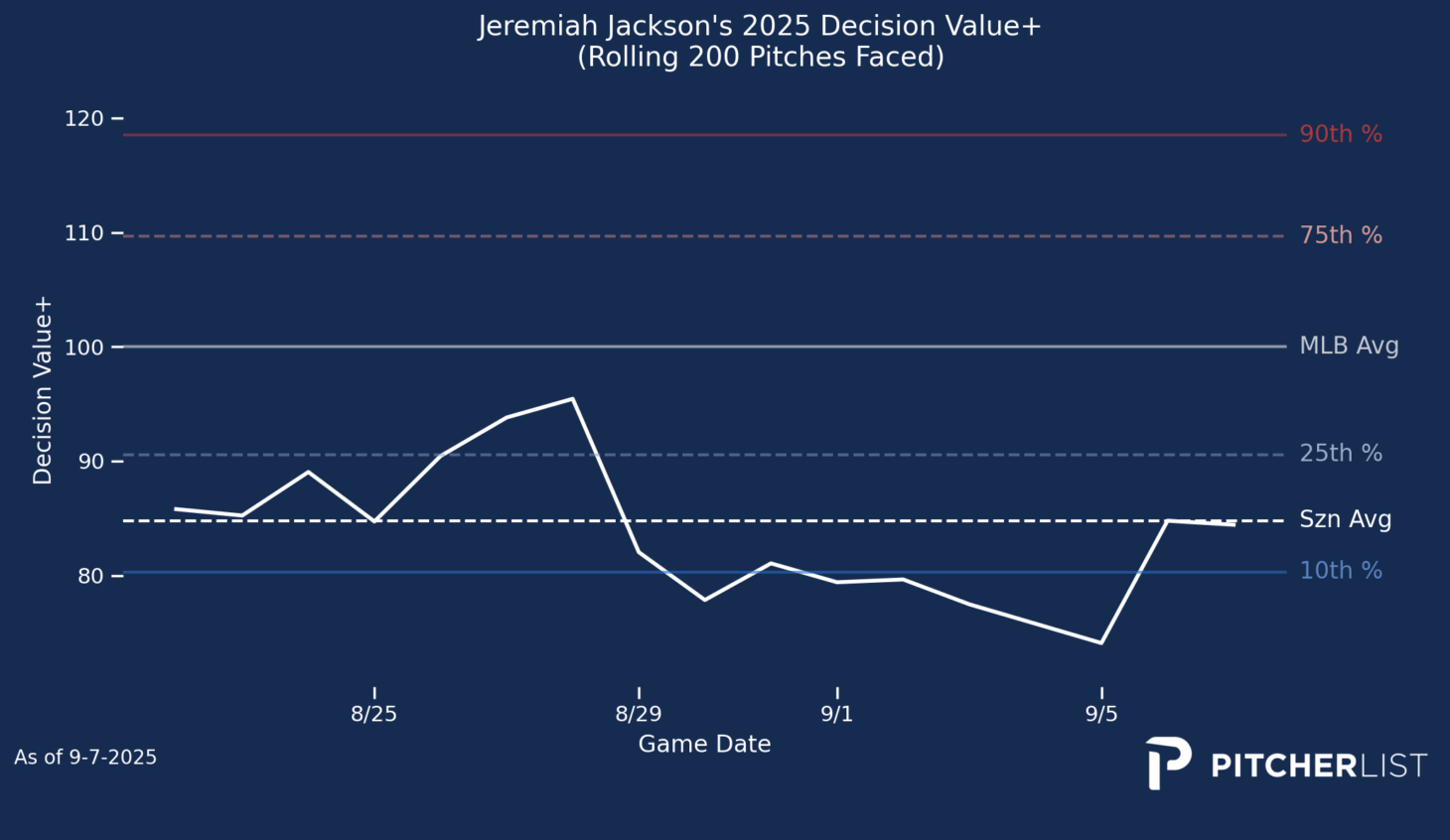
Though the poor decision-making, Jackson’s contact rates aren’t great, yet not necessarily a full-stop problem. But with his .305 batting average being fueled by an unsustainable .376 BABIP, his lack of inherent hit tool skills indicates regression is looming. Where that regression lands is yet to be seen, but it is a stretch to think he has made leaps and bounds of improvements from the .252 and .205 averages he saw in his 2023 and 2024 MiLB seasons, respectively.
Verdict: Not Legit – Jackson is an exciting young player with a solid swing, but his poor decisions and resulting contact rates are likely to hold him back from true ascension for the Orioles.
Bryan Woo, SP, Seattle Mariners
Bryan Woo is one of the premier pitchers in the league. With 19 of his 27 starts this year being quality starts, Woo, as a pitcher, is legit without question. But this year has seen an even further evolution of his game. Where previously he was a strong pitcher despite his low strikeout rates, this year Woo has increased his K/9 from 7.49 to 8.96. Is this increase in strikeout propensity legit?
First, let’s look at his arsenal. Woo has previously thrown fastballs 75% of the time, and this year is no different. None of his pitches changed year-over-year by more than 3 percentage points of his overall mix.
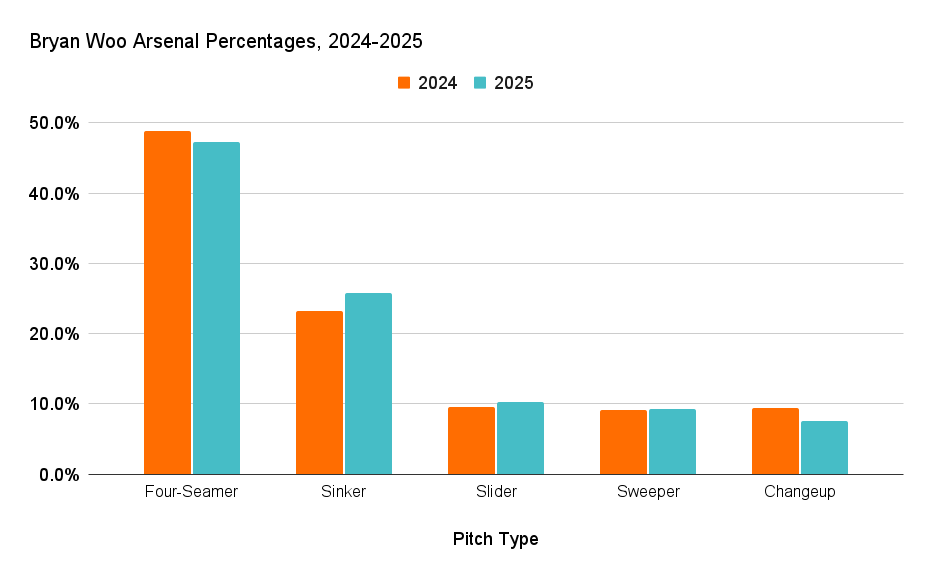
Additionally, none of his pitches really took a step forward in Stuff. Though his whiff rate has seen marginal improvements, the only pitch that has seen a somewhat substantial increase in whiff rate from last year to this year is his slider, improving from a 24.1% mark in 2024 to 35.7% in 2025, showing similar rate changes even in the zone. This is despite a drop in PLV on the pitch from 5.26 last year to 5.11 this year. It grades out worse, but has performed better.
He is locating his slider a bit differently this year compared to last year. Where it was previously painted well down-and-away to righties, he has striped them more elevated this year. Though it might tunnel better off his high fastballs, this drastic of an increase in whiff rate is still unexpected at these spots.
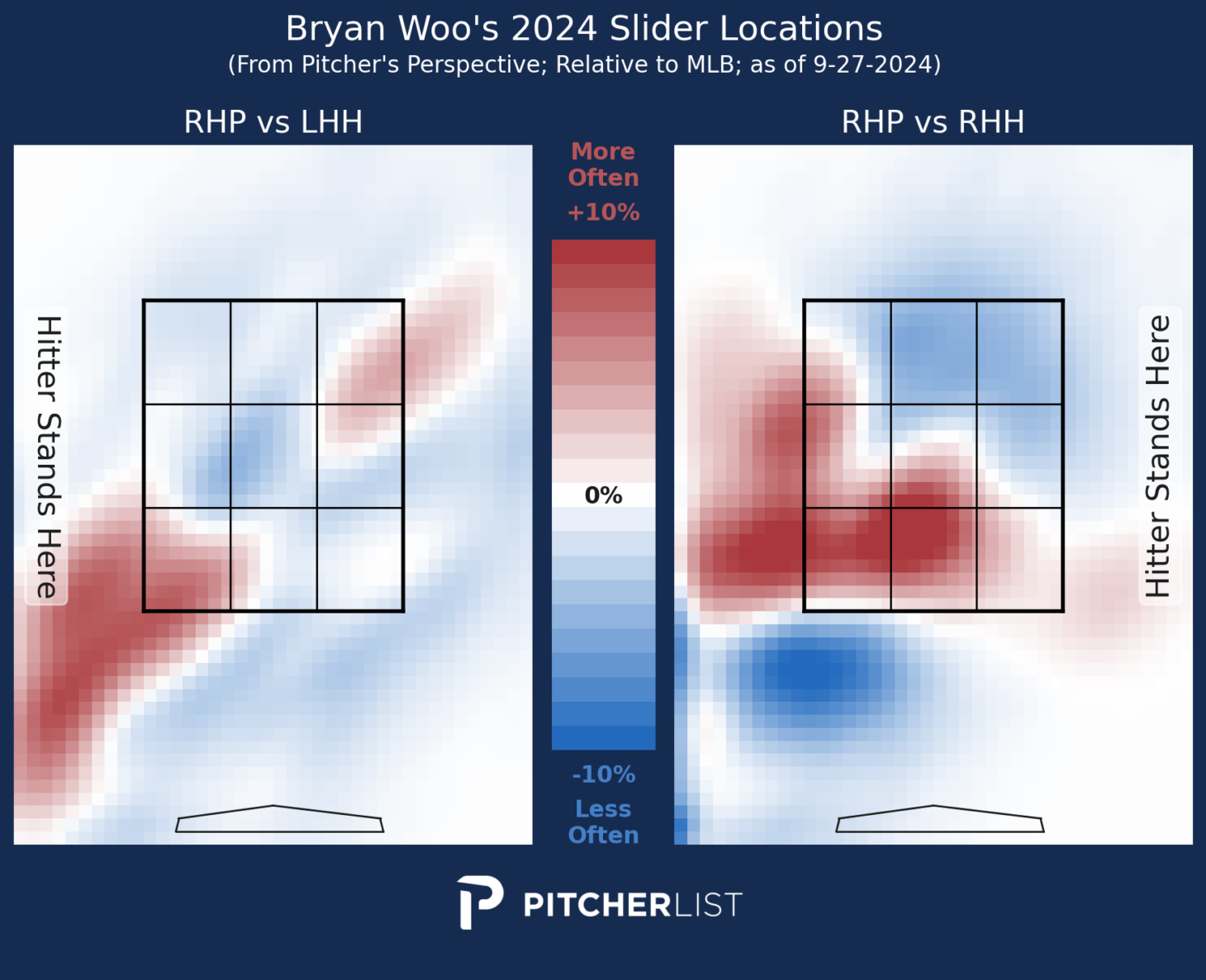
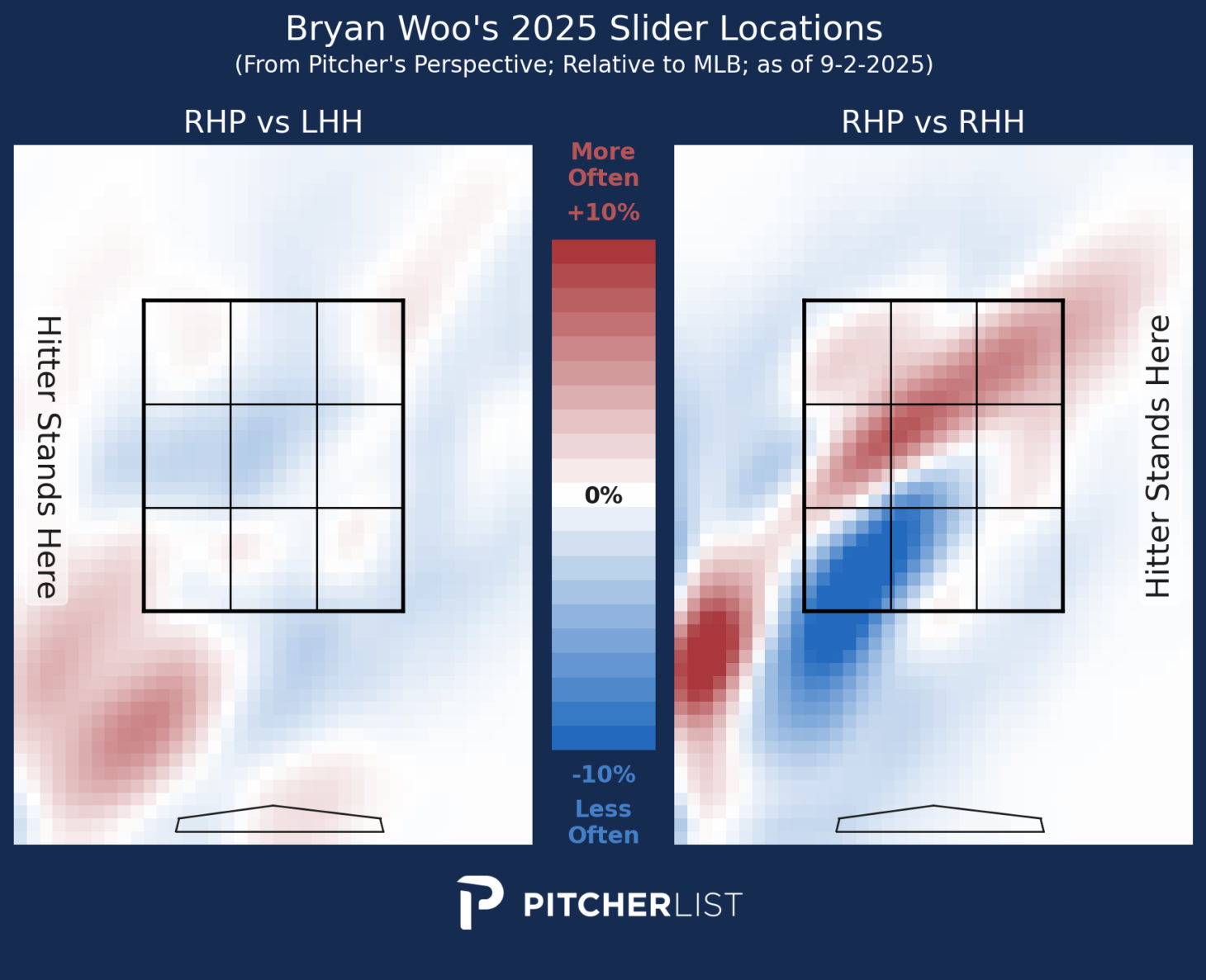
With Sliders only making up about 10% of his arsenal, Woo’s swinging strike rate is showing only marginal change year-to-year. A bigger difference this year has actually been in his called strike rate, though it has turned down instead of up. A big factor in this has been opposing batters’ aggressiveness in swinging at pitches in the zone, adjusting to address Woo’s ability to keep his pitches over the plate. With his CSW dropping over 3 percentage points, it’s hard to see why Woo is getting more punchouts this year.
Verdict: Not Legit – Woo is still an elite pitcher, but without a jump in stuff or a change in approach, Woo’s season shows no indication of an increased K%. His true talent strikeout rate is likely still higher than the 21.4% he saw in 2024, but the jump to 25.2% this year has been more substantial than he deserves.
Trent Grisham, OF, New York Yankees
Trent Grisham has had a resurgent season for the Yankees, blasting his 30th home run of the season a few games ago after hitting 10 in August alone. Coupled with a reasonable .243 batting average and strong .825 OPS, Grisham carries the second-best wRC+ among Yankees batters, unsurprisingly ceding the top spot to Aaron Judge. After two straight seasons batting below .200, has Grisham found a second wind in the middle of his career?
Over the past few seasons, Grisham has shown an innate ability to reach high barrel percentages with elite chase rates. But the most glaring differences in Grisham’s game that have helped his successful season along are a reduction in strikeout rate and a maximization of his pulled air percentage, patching the holes in his previously half-baked profile.
Fueling his strikeout rate reduction, Grisham has worked his overall contact rate to an 81.6% mark, the best of his MLB career. This is almost entirely fueled by a large jump in his in-zone contract rate, from 81.3% in 2023, his last full-workload season, to 88.3% this year. Dividing even further, Grisham’s contact rate against both fastballs and breaking balls has jumped around 7 percentage points compared to his poor 2023 season. Where this was once a major flaw, Grisham has brought his contact rates to a very respectable and fairly average place.
Part of this could be Grisham’s willingness to adjust his stance. Grisham has gone from a 2° closed stance in 2023 to an 11° open stance during his first stint last year with the Yankees, and up to a 15° open stance this year. Where he previously had his hands down closer to his hip, he now sets his hands in a position more ready to swing, cutting off inefficient motion that could lead to added swing variability and a higher propensity to whiff.
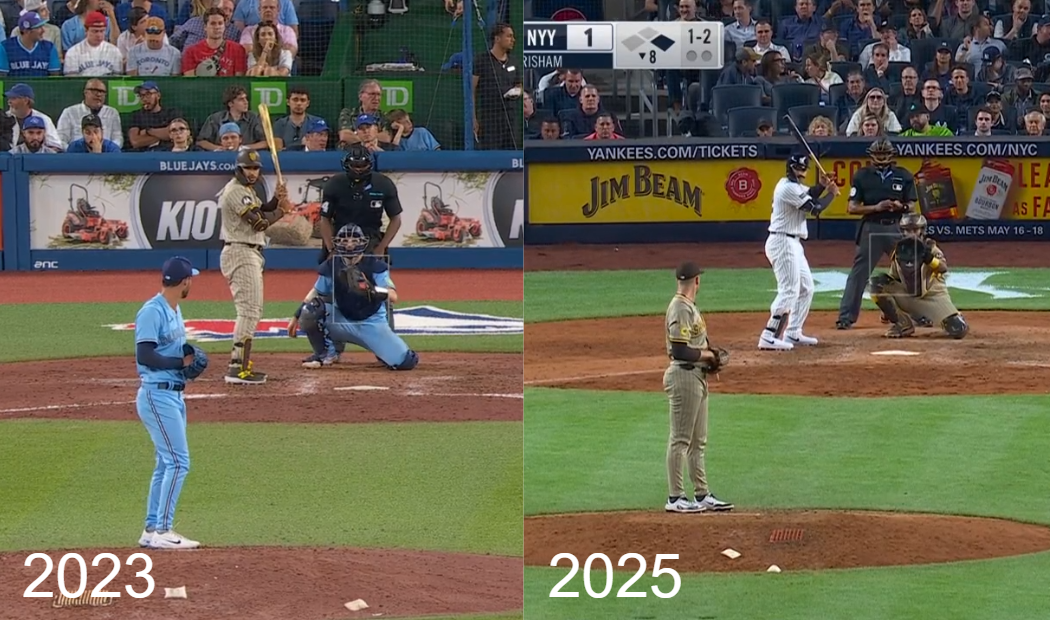
When he is making that more common contact, Grisham has also found the highest Pull AIR% of his career at an elite 23.9% rate, leading to the highest barrel rate of his career. But these rates are a bit confusing, as Grisham’s swing mechanics don’t necessarily lend themselves to pulling the ball in the air. He catches the ball less out in front than MLB average, and his attack direction is even 2 degrees towards the opposite field. Though he has cut his ground ball rates, thanks to his marginally improved attack angles, it is not so clear if his pulled air percentage increases are here to stay.
While Grisham has been doing the most damage against fastballs this season, belting 20 of his home runs against them with a .442 xwOBA, it seems pitchers haven’t adjusted as far as they should. Grisham has seen fastballs at about league-average rates, leaving room for pitchers to further target the .271 xwOBA he puts up against breaking balls.
Verdict: Legit – Grisham has shown improvements in his New York Yankees tenure, backed up with a stance change and improved contact rates. With a .243 BA and a .261 xBA, Grisham’s days of batting sub-.200 appear to be in his rear-view mirror. Though his Pull AIR% will likely tick down based on his swing mechanics, and his 30 HRs vs 25 adjHRs at Yankee Stadium is mildly concerning, Grisham’s new profile seems more like a .250-AVG/20-25-HR/strong-OBP player with a slight bump if he accepts the Yankees’ impending qualifying offer.
Photo by Icon Sportswire | Adapted by Doug Carlin (@Bdougals on Twitter)
