





Zac Gallen’s 2025 is not one to write home about. After three straight seasons of a sub-4.00 ERA where he was the seventh most valuable pitcher in baseball in that span, the rails came off this year. He posted a 5.57 ERA in April, and that was the first of four straight months of an ERA over 5.00. For an Arizona Diamondbacks team that faded from the playoff race earlier than expected, Gallen’s poor performance added insult to injury. In his last year before hitting free agency, it looked like all the progress he had made toward getting a multi-year, large contract was undone.
Once the calendar flipped past the trade deadline, one where Gallen saw rotation-mates Merrill Kelly and Jordan Montgomery get shipped off, something finally changed. Gallen posted a 2.57 ERA in August and followed that up with six shutout innings to start September, marking seven straight starts with three earned runs or fewer.
Gallen traditionally has been a strikeout-focused pitcher, but this year has seen the punch outs disappear. While much of the season appeared to focus on recouping those lost strikeouts, the recent stretch is anchored by contact suppression. Through new pitch usage and a resurgent fastball, Gallen has come back from the depths of the ERA leaderboard.
The first aspect of Gallen’s bounce back is his fastball velocity. For most of the season, Gallen sat just above 93 mph on his fastball. It wasn’t a dramatic fall off, but it would’ve been his lowest full-season fastball velocity since 2020. As the season went on, mainly in July and August, Gallen’s velocity spiked up towards 94 mph. This puts his season-long average velocity near the likes of 2023 and 2024, but below the 2022 peak of 94.1.
Having the fastball velocity sit closer to where it’s been while he’s succeeded is critical for his confidence, as he can locate the pitch better. While the batted ball and plate discipline metrics haven’t substantially changed, it’s helping everything else in his arsenal.
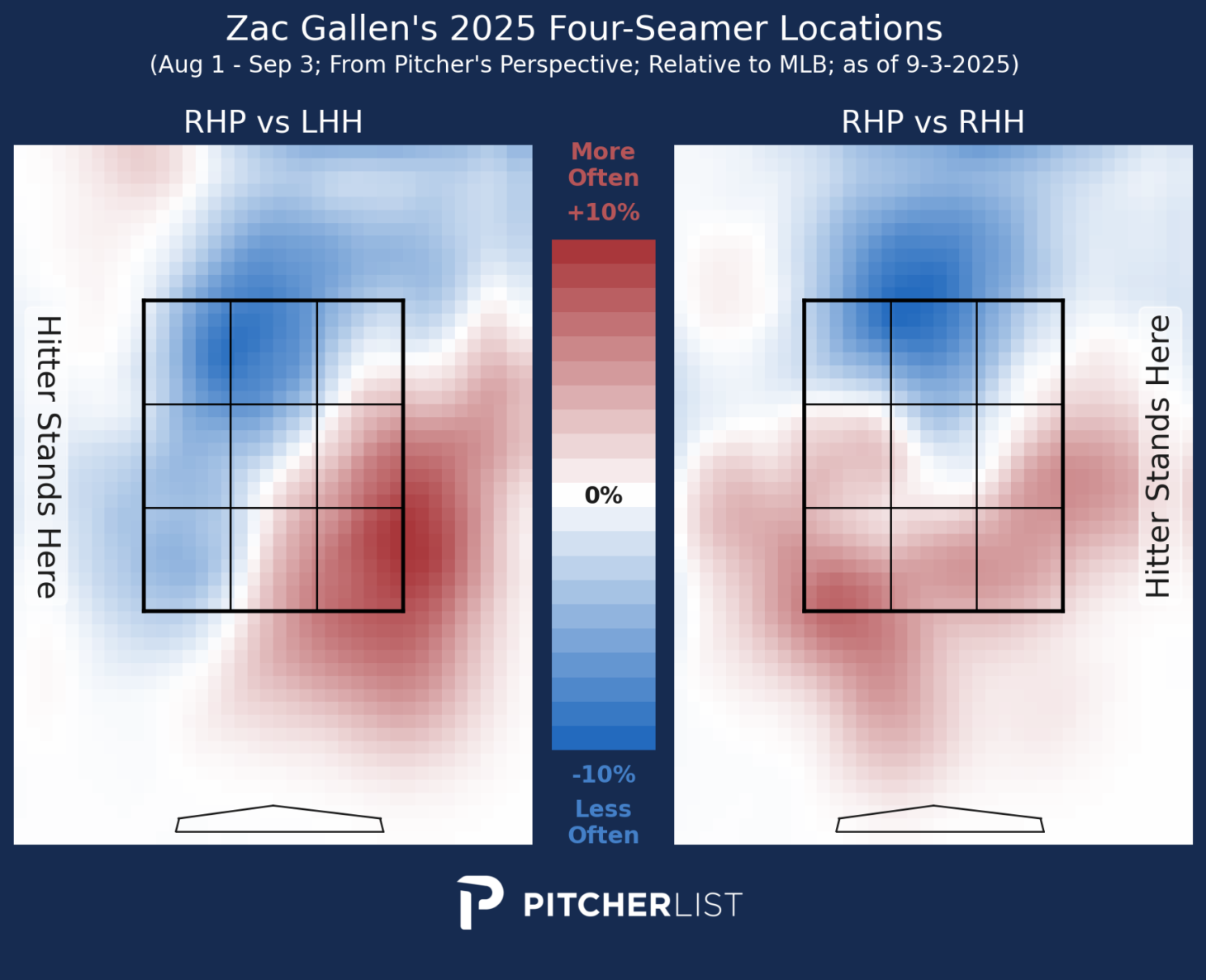
Compared to the earlier months, Gallen has moved away from the up-and-in spot while taking his fastball slightly more off the plate away against lefties. Against righties, he’s throwing his fastball more down-and-away. The result is a 10% improvement in plvLoc+ 105 plvLoc+, now above-average.
Since the fastball gives up hard hits and doesn’t miss bats, Gallen has to be very careful about its usage. He’s thrown the fastball nearly half the time to all hitters in his career, but he finally broke off of that, at least to righties.
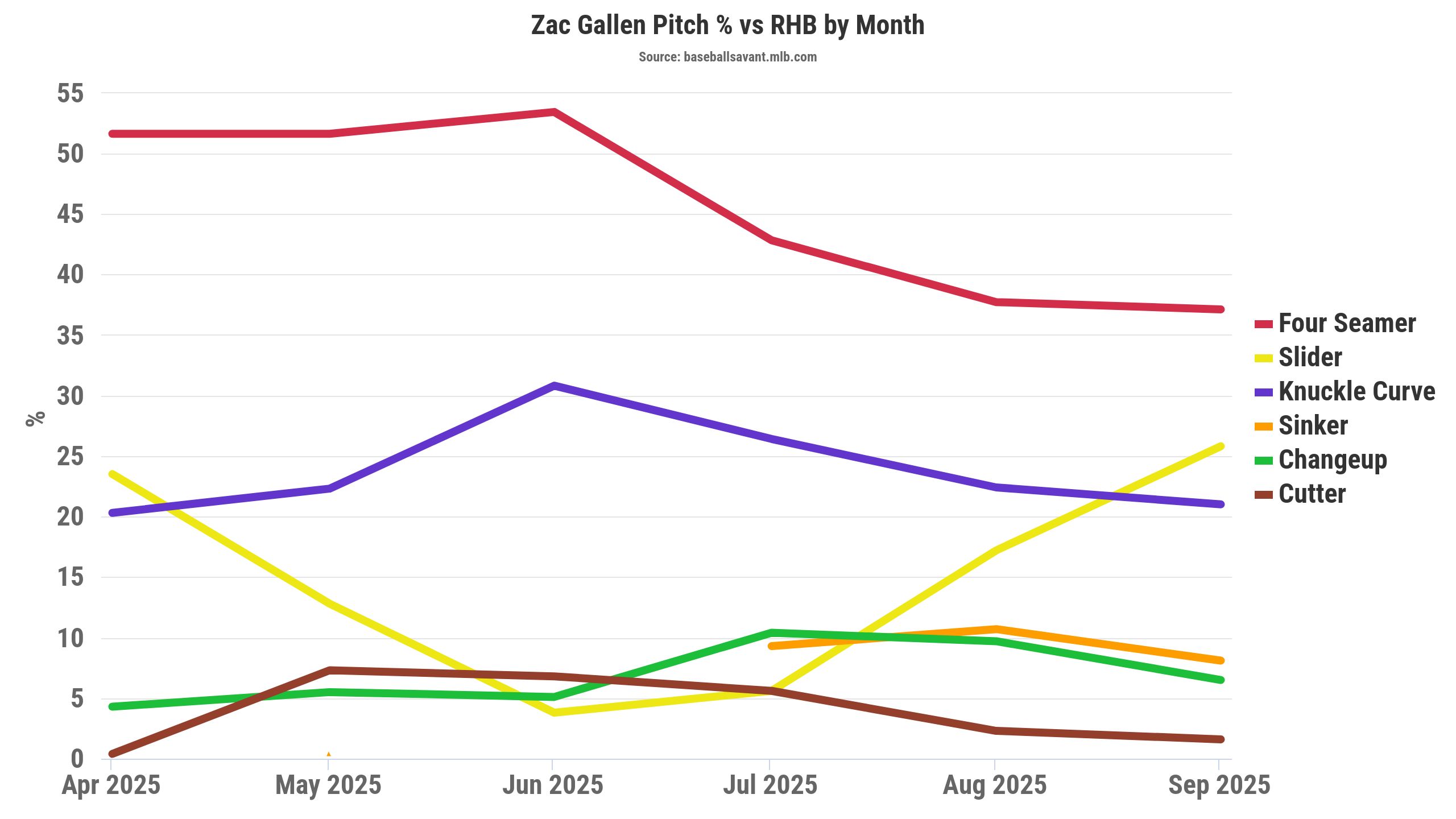
Gallen turfed the fastball in exchange for a sinker, giving him a secondary fastball to keep hitters off balance. While the new pitch doesn’t have great specs (13 inches of iVB is 92nd percentile carry, 12 inches of run is 7th percentile break), he locates it well.
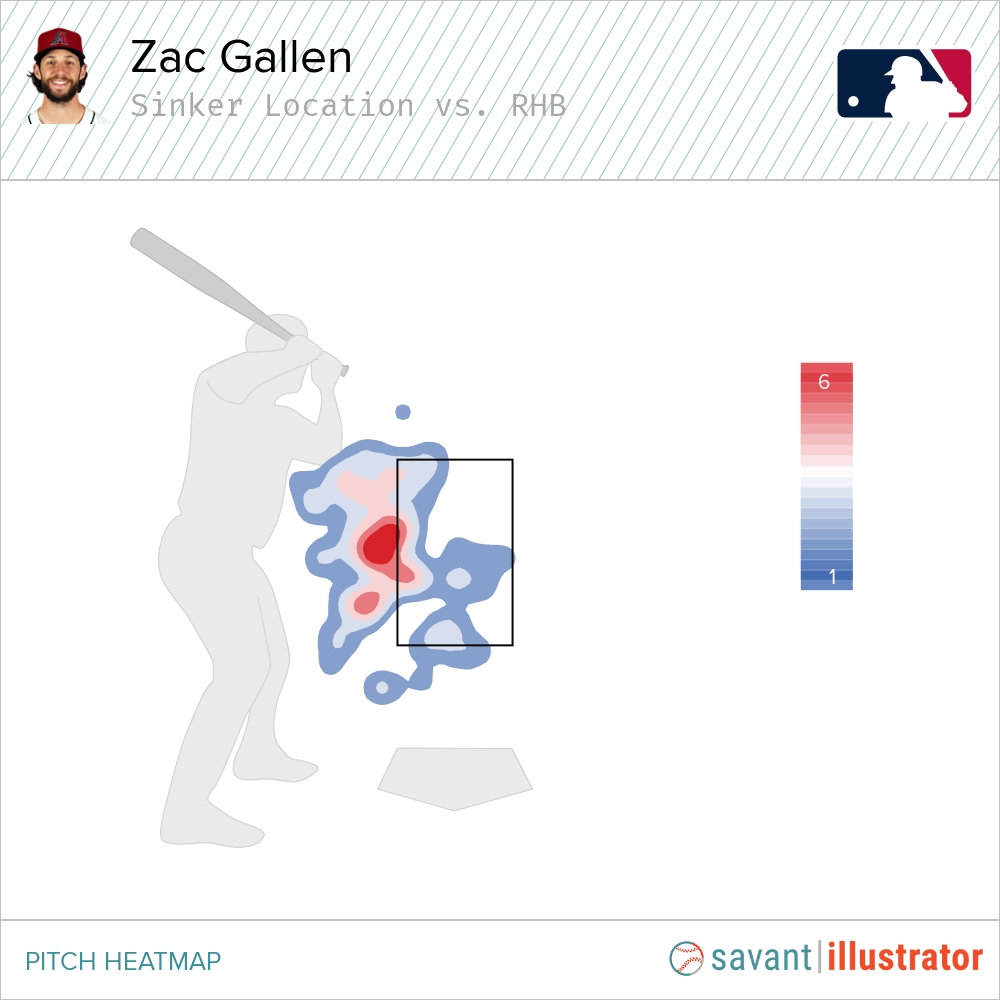
Running it inside to righties makes it hard for them to create damage. The 41.7% ICR is slightly above league average, but it’s weighted by one-third of flares & burners. So even if it’s giving up some less-than-ideal contact, it’s the best kind.
The other significant trend for Gallen (as you may have noticed on the chart) is the return of the slider. Gallen started 2025 with the slider at 23.5% usage, far greater than any previous usage against righties. After the first month, he progressively scrapped it until he recently increased the usage.
The first month of the slider usage was great, although he still struggled overall. When he backed off the pitch, it was for good reason; it missed fewer bats and resulted in significant damage. It would seem like the slider might be gone for good. Under the hood, the shape of the pitch subtly changed.
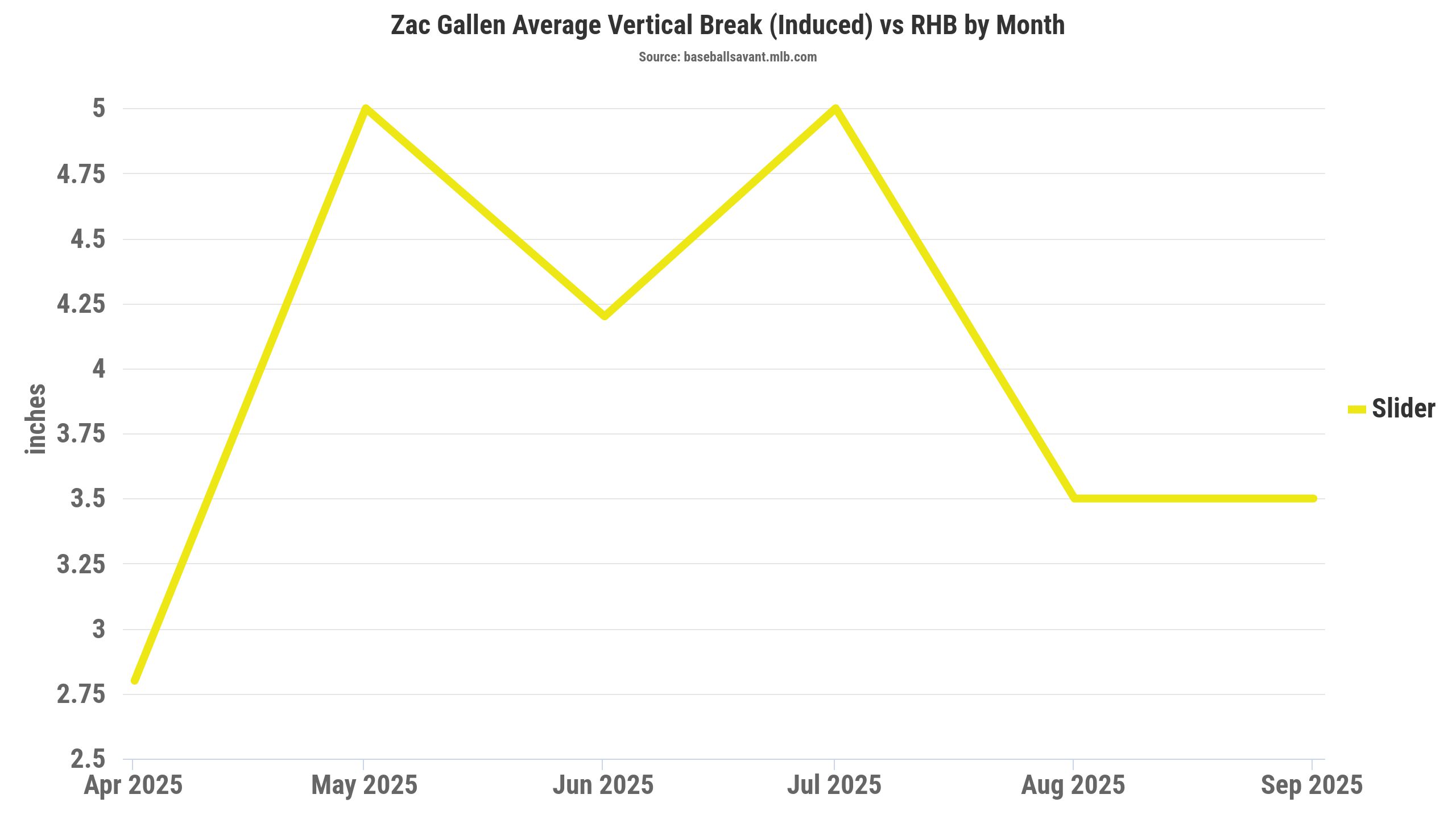
The pitch nearly doubled its vertical break, meaning that it had significantly less drop to it. The slider shape is different from years past, as he’s slowly lost drop on the pitch year-over-year. It only started at -1.5 inches of iVB and trickled up to 1.3 by last year. The lows of around 2.75 and 3.5 are a step up from that. But when it spiked even further up, Gallen was unable to bury the pitch as it worked against him.
While this is a beautiful piece of hitting by Willy Adames, that’s a missed location that puts the slider right into the barrel of the bat. Compared to a more recent slider, he’s able to get on top of it and throw it in more ideal locations.
As he’s returned to throwing the slider again, the curveball has also lost usage against righties. The curveball has still been as good as ever, posting a 33.0% CSW% as an exceptional putaway pitch. However, it has unfortunate results: it has a 44.0% HR/FB%, with three of the four home runs conceded coming on two-strike counts. He now throws the curveball around 20% of the time, down from the high of around 30% in June and July. Curveballs struggle to be a dominant usage pitch due to the velocity gap with a fastball, so the slider helps bridge the two together.
As Gallen has found the feel for the sinker and rediscovered the slider, he’s redefined himself against righties. He’s focusing more on contact suppression rather than whiffs with this arsenal, but it’s working. Since August 1st, righties are hitting just .175 with a .288 SLG and a 24.1% strikeout rate.
While Gallen’s gains against righties come from turning away from the fastball, his current lefty approach is quite the opposite.
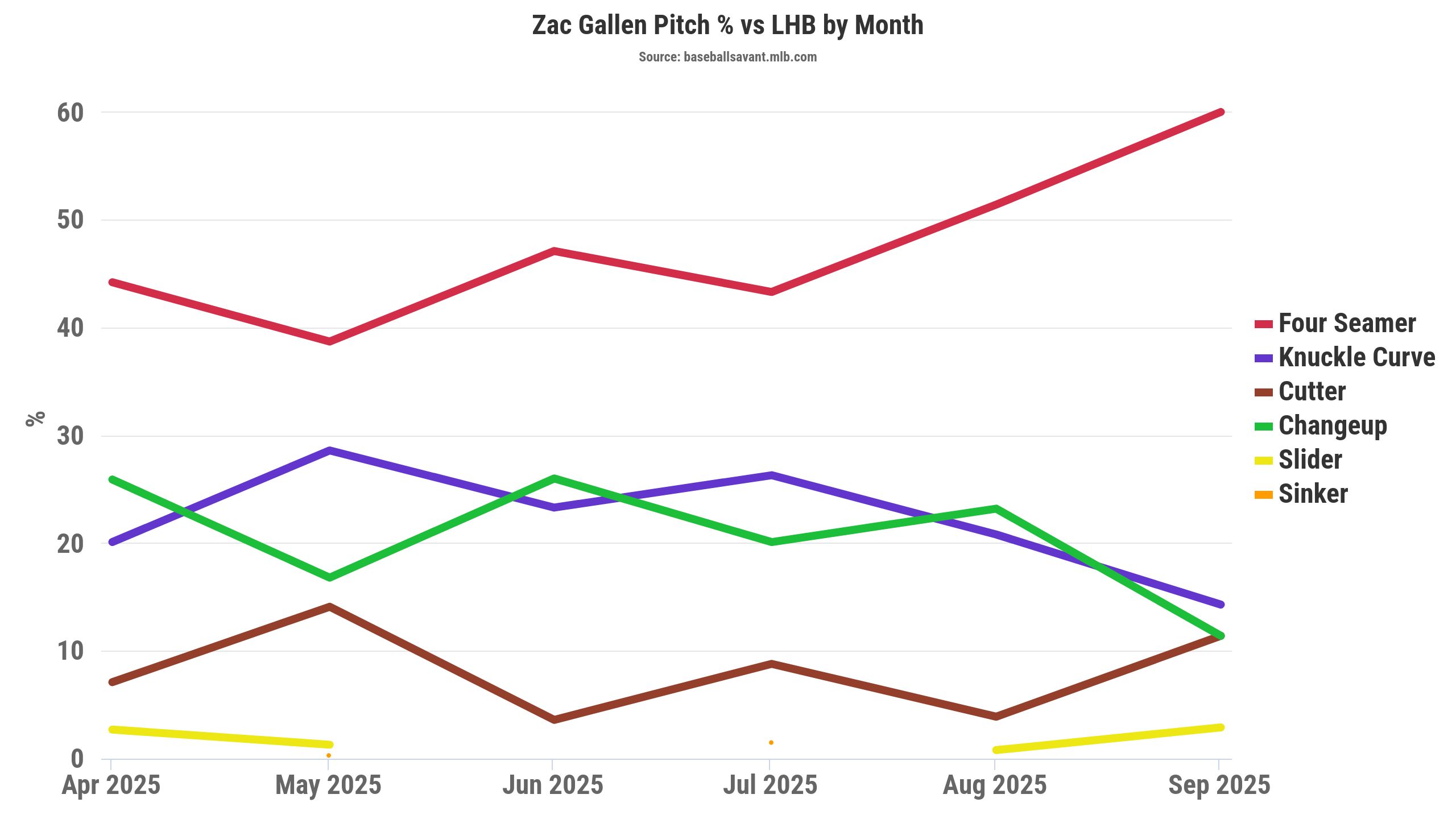
He’s using the fastball more than half the time, with the one September start being an extreme 60% usage. He’s using the fastball more in every situation, primarily taking away from the curveball. Like the reasoning for moving away from the curveball against righties, it’s not due to poor performance. Instead, it’s managing the rest of the arsenal to be okay while the curveball doesn’t lose its flash.
By throwing the fastball more, Gallen is locating it only down-and-away now. While he knows he isn’t going to beat hitters with the fastball, he’s letting them hit it to the opposite field, where minimal damage is generally done. 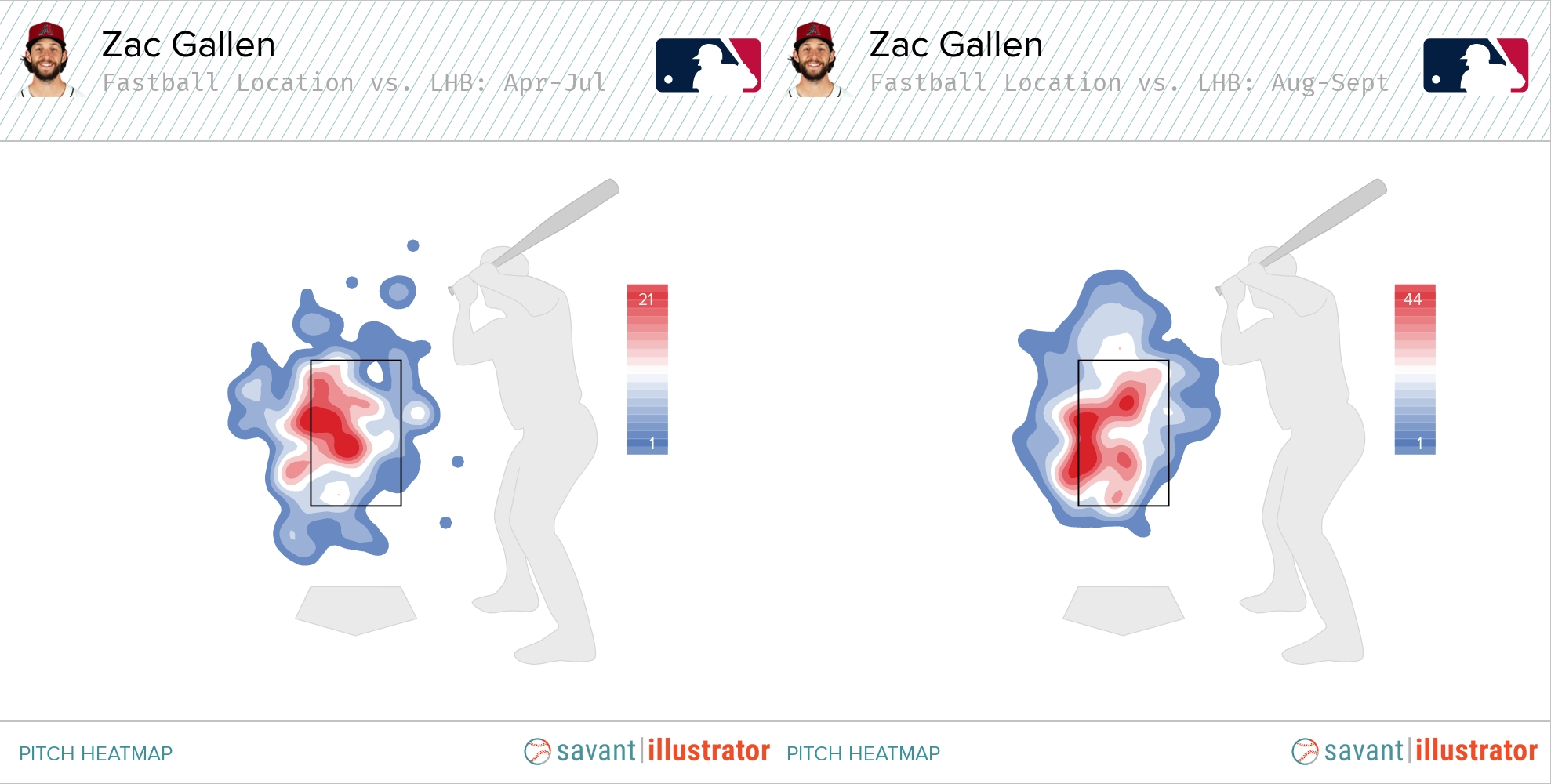
Left-handed hitters hit 42.3% of their batted balls to the opposite field in August, marking the highest against Gallen this year. The resulting batted balls have turned in just a .273 average and .273 xSLG, nothing worse than a single. This is the strategy that many lefties have deployed this year, leading to great success regardless of the quality of stuff.
At the same time, the curveball has drifted into the zone more frequently, trading whiffs for called strikes and weak contact. The rest of the arsenal isn’t great to lefties: the changeup is average, and he’s turned away from the cutter due to poor results. But it’s all just good enough to survive left-handed hitters, which is all he needs.
Gallen took a step forward in focusing on suppressing contact, as the strikeout stuff hasn’t appeared like it used to. After enough months of struggling, he’s found new pitches and new ways to keep hitters off-balance, yet still can find the occasional strikeout. He’s slowly but surely finding his way back to his preferred reality, and the willingness to tinker should help the Diamondbacks down the stretch or whatever team wants him this offseason.
