







Pitcher List has launched a hitter similarity app with the help of Kyle Bland, Director of Data Analytics and Research, that spits out players with matching skills from the last five seasons. This direct comparison across decision-making and batted ball categories clearly illuminates a variety of outcomes for any given hitter. Except that it doesn’t yet function for minor league players, so we have to develop our own process. This information gap is part of the “fun” of analyzing and projecting the younger players. We get to use our brainpower to make our best guess using whatever sources we have available, from scouting to video, as well as their numbers.
The purpose of this article series is to help dynasty managers dive into what prospects could become and how that translates to fantasy value. Looking at historical seasons and the similar skills charts, floor and ceiling comps were identified to imagine the range of outcomes for some of the highly sought-after third base prospects.
Third Base Dynasty Comps
Munetaka Murakami, Chicago White Sox
True Projection, Floor, and Ceiling Dynasty Comp all wrapped up in one: 2021 Joey Gallo
38 HR | 6 SB | .199 AVG | .351 OBP | .458 SLG | 18% BB% | 35% K%
Including Murakami in the third base position may be a short-term circumstance, given the reports of his underwhelming defense. Yet, he qualifies for the position this season, so onward we go with our assessment of his floor and ceiling.
Given the breadth of available analysis, let’s focus on the game theory of whether or not Munetaka Murakami will pay off. What does he need to do over the first two years to garner a positive reaction from dynasty managers?
First, he needs to play. The toe, oblique, and elbow ailments have throttled his playing time over the last two seasons to 199 games out of a possible 288 games, with many of those games missed due to injuries in 2025. His conditioning has been called into question, but we would hope that he could manage a 140+ game per season average or a minimum of 560 plate appearances per season.
Murakami has a ridiculous career average of 21% home-run-per-fly-ball (HR/FB) rate in Nippon Professional Baseball, immediately putting him in the top 10 of MLB hitters if that power were to travel stateside over the Pacific Ocean. If he continues averaging 140 fly balls, that 21% HR/FB rate would equal just over 29 home runs per season. If he only managed 20 home runs, his HR/FB rate would fall to 14%, which is still an above-average mark.
The number one player who is consistently used as a reference for Murakami is Joey Gallo. Well, which version of Gallo should we compare him to? Gallo has low contact rates and high swinging strike rates that weigh down his value, while also posting good walk rates and great power numbers. After looking at the similarity skill chart, I would offer Gallo as the ceiling and floor. We desperately want Murakami to hit bombs at will and would be willing to sacrifice the dent in batting average to bank those stats. Yet, we see similar skills and realize that all of these players are similar to the 2021 Gallo are hitting a bunch of home runs without much else.
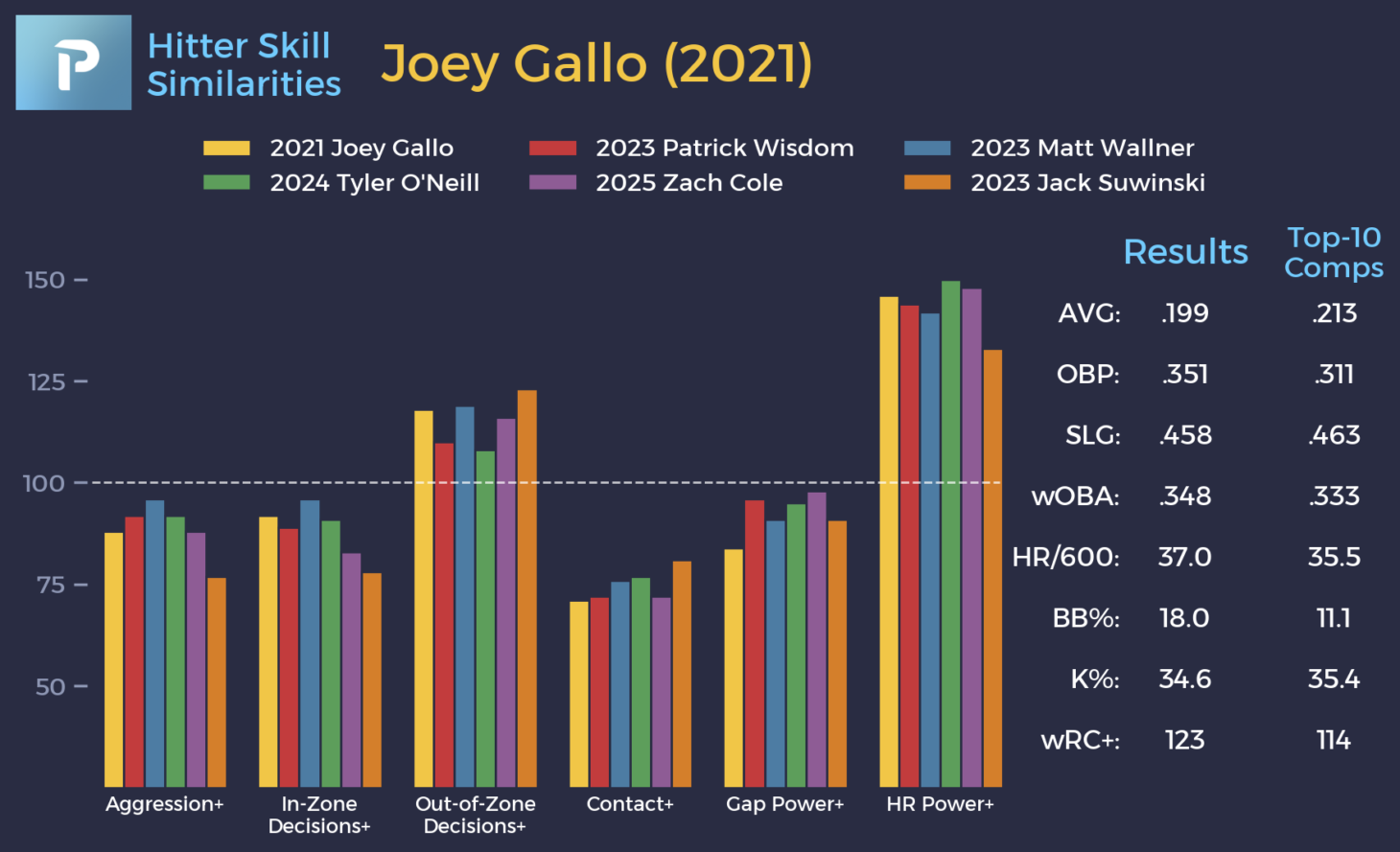
On the other hand, Zach Cole offers a hopeful outcome for Murakami. Cole posted ugly strikeout rates, but did pop off in a short stint while contributing a few steals and an acceptable number of walks. The skills chart shows that he makes decent in-zone decisions while having a higher rate of aggression. The contact rate could benefit from some improvement there, but he isn’t chasing as much as some of these other guys and offers about average gap power. A high strikeout rate with other tangible skills could help lead Murakami to a higher-than-expected batting average like Cole (.255), while still exceeding thirty home runs.
With questions about the transition, conditioning, and ability to make enough contact, Murakami has all of the same questions as other hitting prospects. Yet, his floor should be much higher in terms of accessing the power. He only needs to be average through his first two seasons to be of value with a decent chance to make a difference on your fantasy team, with the realistic shot that he greatly exceeds those projections.
Dynasty Floor Comp: 2023 Alec Bohm
20 HR | 5 SB | .260 AVG | .327 OBP | .417 SLG | 10% BB% | 28% K%
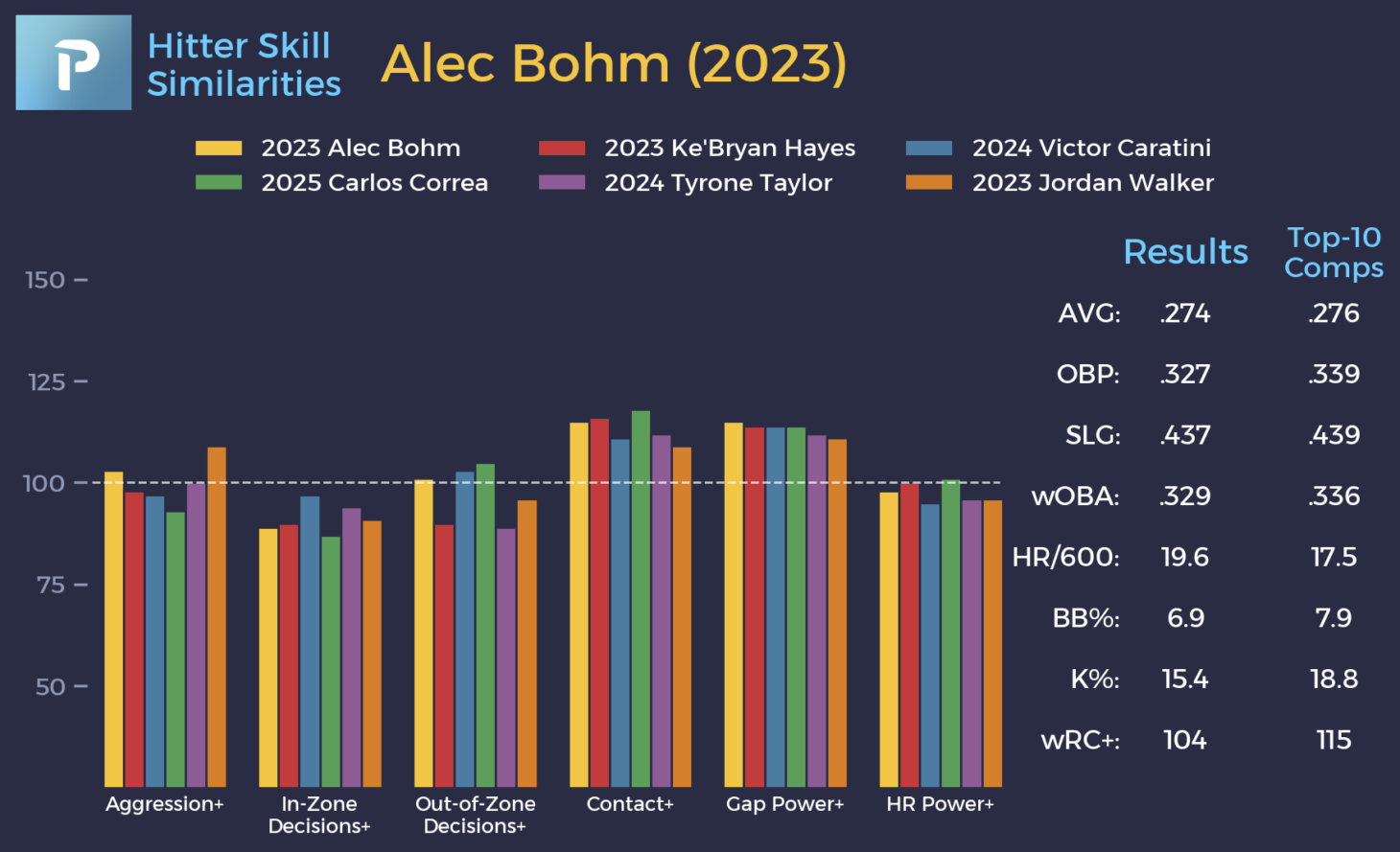
You never truly believed the stolen bases would stick for Jacob Reimer, but seeing the total fall all the way to four is still a letdown. On top of that, the strikeouts have ticked up, and the poor launch angles have crept back in. A 47% ground-ball rate has capped the counting stats, even though he still manages to reach the 20-homer mark thanks to a strong barrel rate. He hits the ball hard enough to support a .260 average, but that production feels a little hollow without the speed and with only moderate power output. The saving grace is his discerning eye — the walk rate buys patience and leaves you believing Reimer can eventually pull it all back together.
Dynasty Ceiling Comp: 2025 Manny Machado
27 HR | 13 SB | .276 AVG | .373 OBP | .473 SLG | 12% BB% | 21% K%
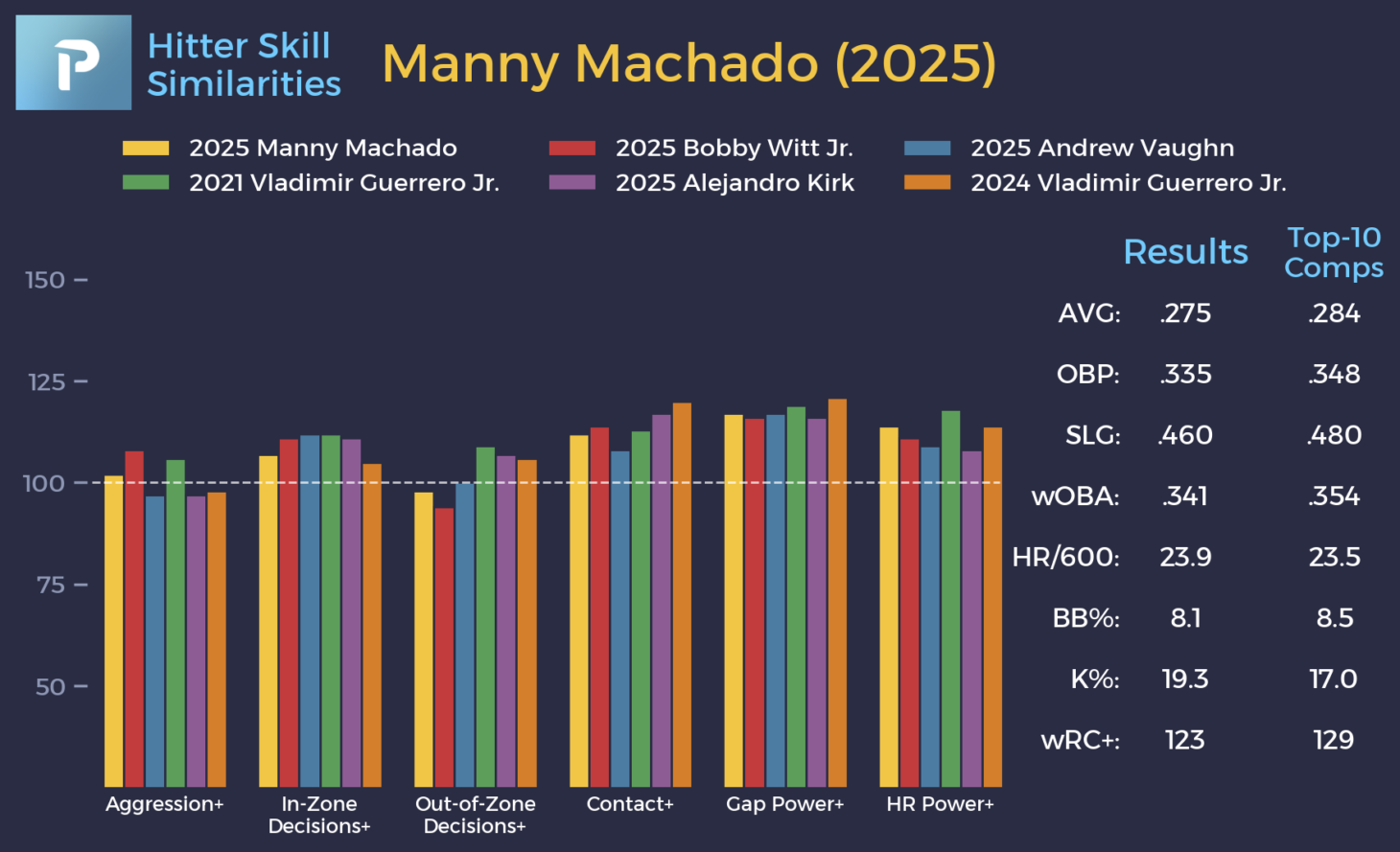
Reimer may never reach 30 home runs, but he’s clearly pushing the upper edge of his power. His pulled air rate plays perfectly with the 335-foot line at Citi Field, allowing him to maximize his power to the pull side. He’s making about as much contact as ever, just with fewer balls beaten into the ground. A slight improvement in swing-and-miss has his strikeout rate at a manageable 21%, which pairs nicely with a healthy 12% walk rate. The 27 home runs are exciting — but the real separator was the 13 stolen bases. That version of Reimer is a top-five player at the position, contributing across every category.
True Projection
The ingredients for top-five production at the position are here. Reimer consistently drives the ball to the most fertile areas of the field, allowing him to birth strong outcomes across all of the categories. There’s also reason to believe more contact gains are coming, which would keep the batting average from dipping as much as the strikeout spikes might suggest. He will run into cold stretches where the swing-and-miss bites, but he’s shown the ability to make adjustments and shorten those slumps. The 2025 speed surge may prove a tad optimistic long term, yet it still hints at enough opportunistic running to matter. With this kind of offensive profile, Reimer stands out as a priority third baseman target — the floor is sturdy, and the ceiling is a difference-maker.
Tim Piasentin, Toronto Blue Jays
Dynasty Floor Comp: 2023 Ryan McMahon
21 HR | 3 SB | .221 AVG | .296 OBP | .425 SLG | 8% BB% | 33% K%
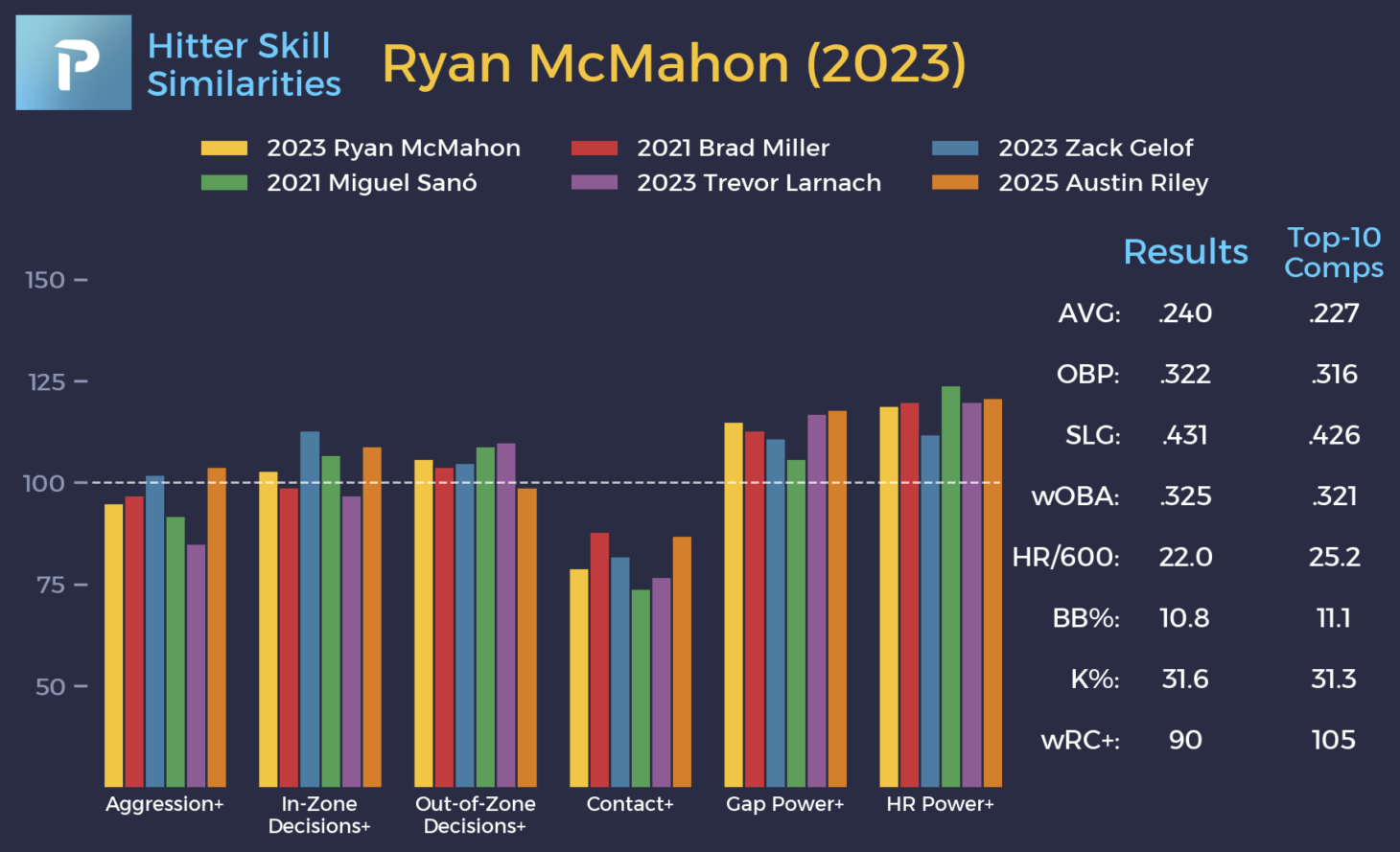
The slightly open stance may allow him to sweep his bat across the width of the zone, but it also opens him up to outside darts. Therefore, the power numbers haven’t fully materialized. Piasentin put up a homer total of 22 at the 2024 Canadian Futures Showcase home run derby, and it remains his highest output to date. The exit velocities and barrel rates still look good, but he is not making as much contact as needed to provide value. The swing-and-miss rates are spiraling out of control, so the strong bat speed is rendered moot. He really does connect on balls out in front of the plate, so everyone sees the potential for much, much more. Yet, the breakers and high heaters are giving him fits, driving down his overall production. In addition, the defense has been shoddy, and he is being moved to the outfield. You ended up with a low 20s home run bat with poor swing decisions, a low batting average, and no speed.
Dynasty Ceiling Comp: 2024 Matt Chapman
31 HR | 10 SB | .255 AVG | .328 OBP | .467 SLG | 10% BB% | 28% K%
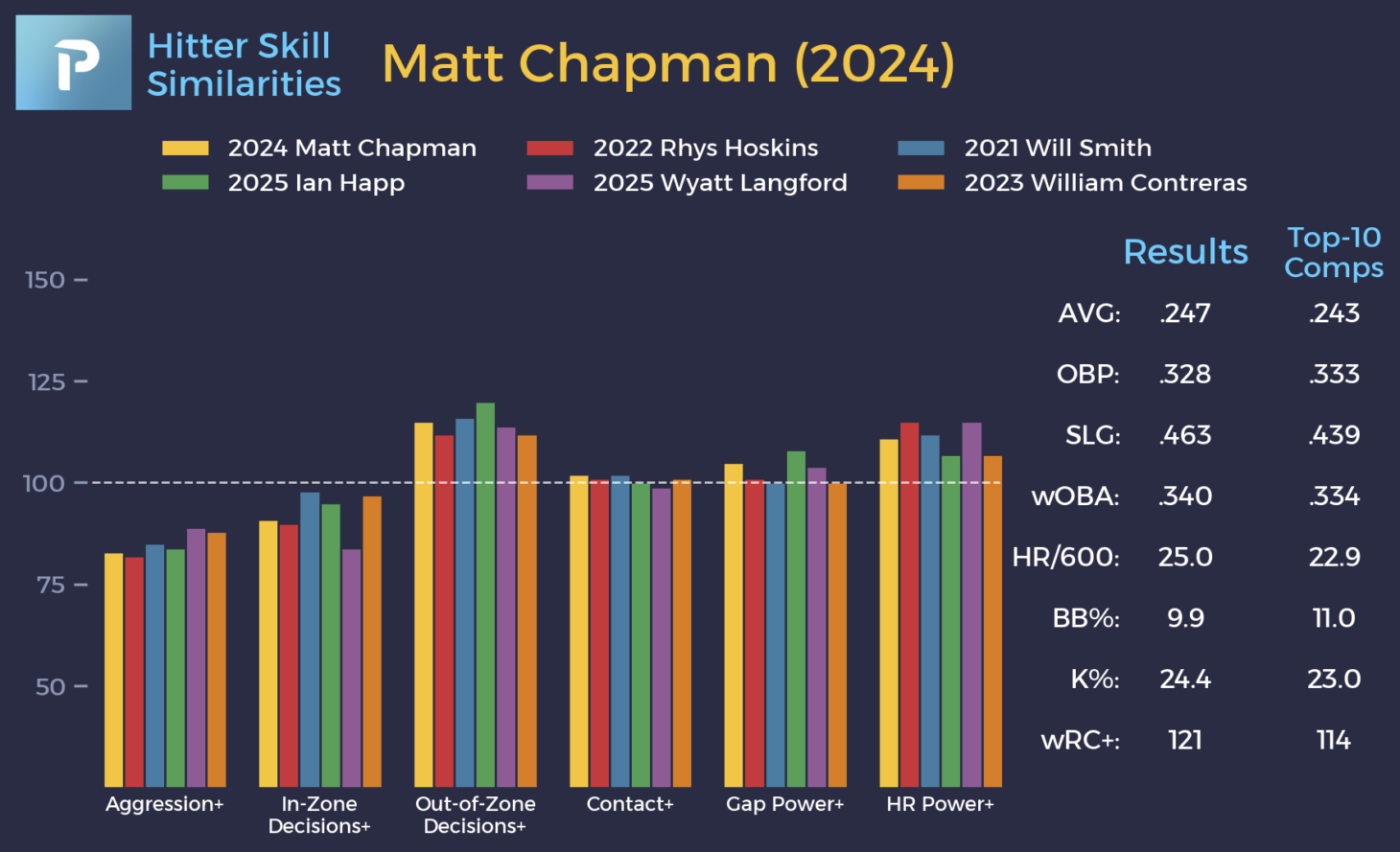
With the weight of an entire country on his back, Piasentin skirts the surface pressure to elevate his game like a Canadian Luisa from Encanto toting five maple leaf donkeys around. He is still filling out the 6’3″ frame, but the bat speed and exit velocities are getting more and more impressive as he rises through the levels. Thirty home runs were accomplished without breaking a sweat, but you would still like to see more contact to drive down the high 20’s strikeout rate. He has been a revelation at third base, where the range is iffy, but the arm allows him to play back and still gun down runners across the diamond. You may want a higher average, but the high isolated power keeps the counting stats humming at a high RPM. Piasentin has surprised with the speed, too, stealing double-digit bases on the year. It won’t be a skill that lasts forever, but you are happy to see him shake off the crushing weight of expectations to play with joy and relaxation.
True Projection
The range of outcomes is so wide for this 18-year-old that forecasting his performance is difficult. Yet, the draft combine metrics speak highly of a player who can drive the ball to the wall easily and over it with regularity. Piasentin posted a 110 mph max exit velocity and 423-foot max distance that set a high bar. However, there is still a major question mark about how he will handle higher-level pitching, given the perception that his high school foes were not of the same ilk as they would be in the United States. His .333 average with the junior national team demonstrated that he is at least on level when facing rookie-class pitching. With the above-average 74 mph maximum bat speed that he displays, Piasentin is expected to do enough damage and cover enough of the plate to make up for any holes in his long swing. Therefore, you are getting a moderately athletic third baseman who has a real shot to surpass thirty dingers and hit for a .270 average.
LuJames Groover, Arizona Diamondbacks
Dynasty Floor Comp: 2021 Yoán Moncada
10 HR | 4 SB | .262 AVG | .333 OBP | .391 SLG | 7% BB% | 19% K%
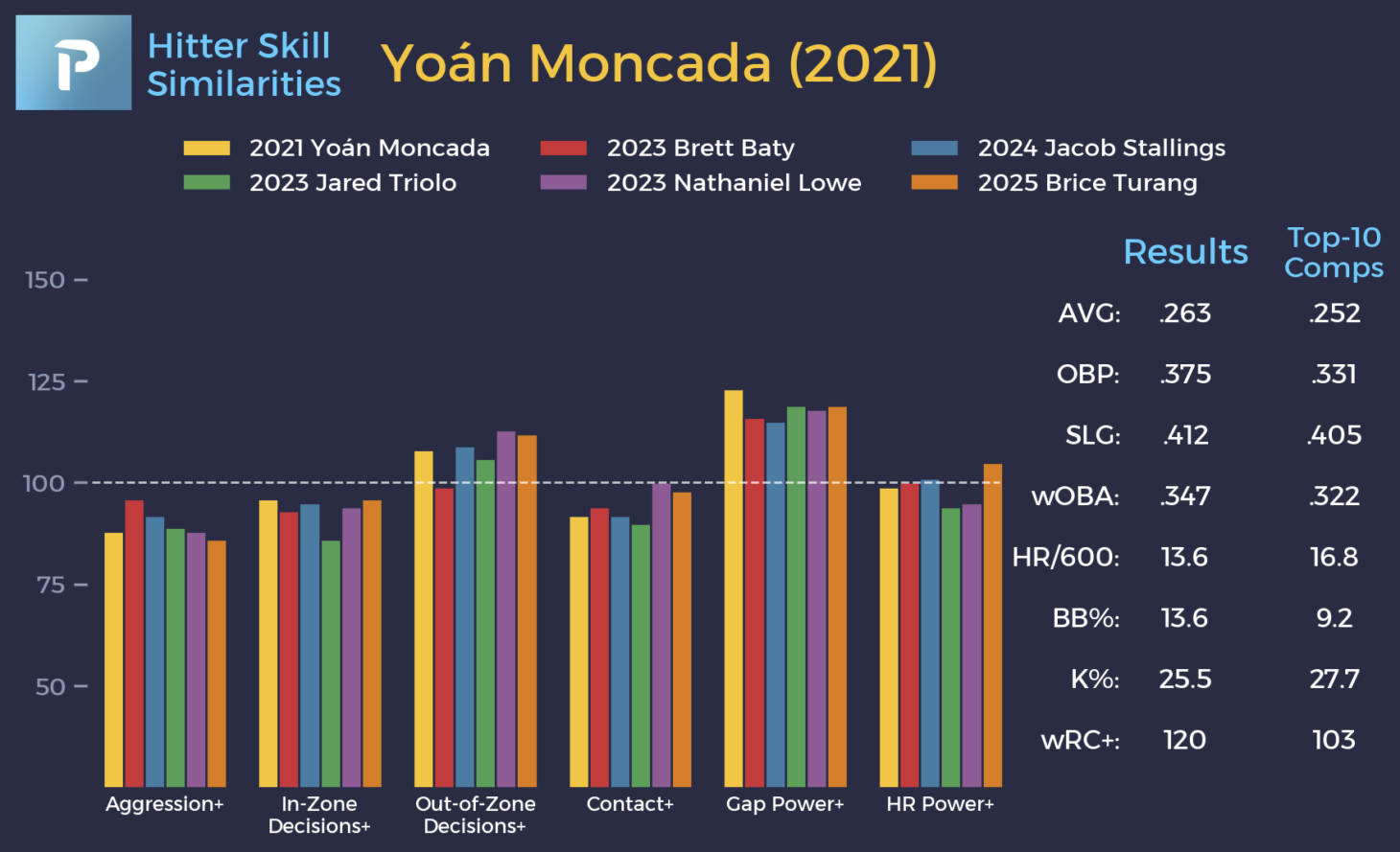
With 40-grade speed, Groover isn’t taking extra bases, and that was never part of the plan. You drafted him to stabilize batting average, but the lack of power and speed keeps him from locking down a full-time starting third base spot on a competitive roster. Despite a strong contact rate, pitchers keep attacking him up in the zone, and his infield fly-ball rate has climbed to uncomfortable levels. The glove keeps him in the lineup, which at least gives him enough fastballs to stumble into double-digit homers. He still handles left-handed pitching well and maintains solid plate discipline. The strikeout rate sits below 20%, but without many walks, it doesn’t move the needle much in OBP formats. In the end, he’s fine as a part-time corner infielder — useful, but replaceable.
Dynasty Ceiling Comp: Mash-up of 2022-2023 Nolan Arenado
18 HR | 12 SB | .292 AVG | .363 OBP | .435 SLG | 11% BB% | 15% K%
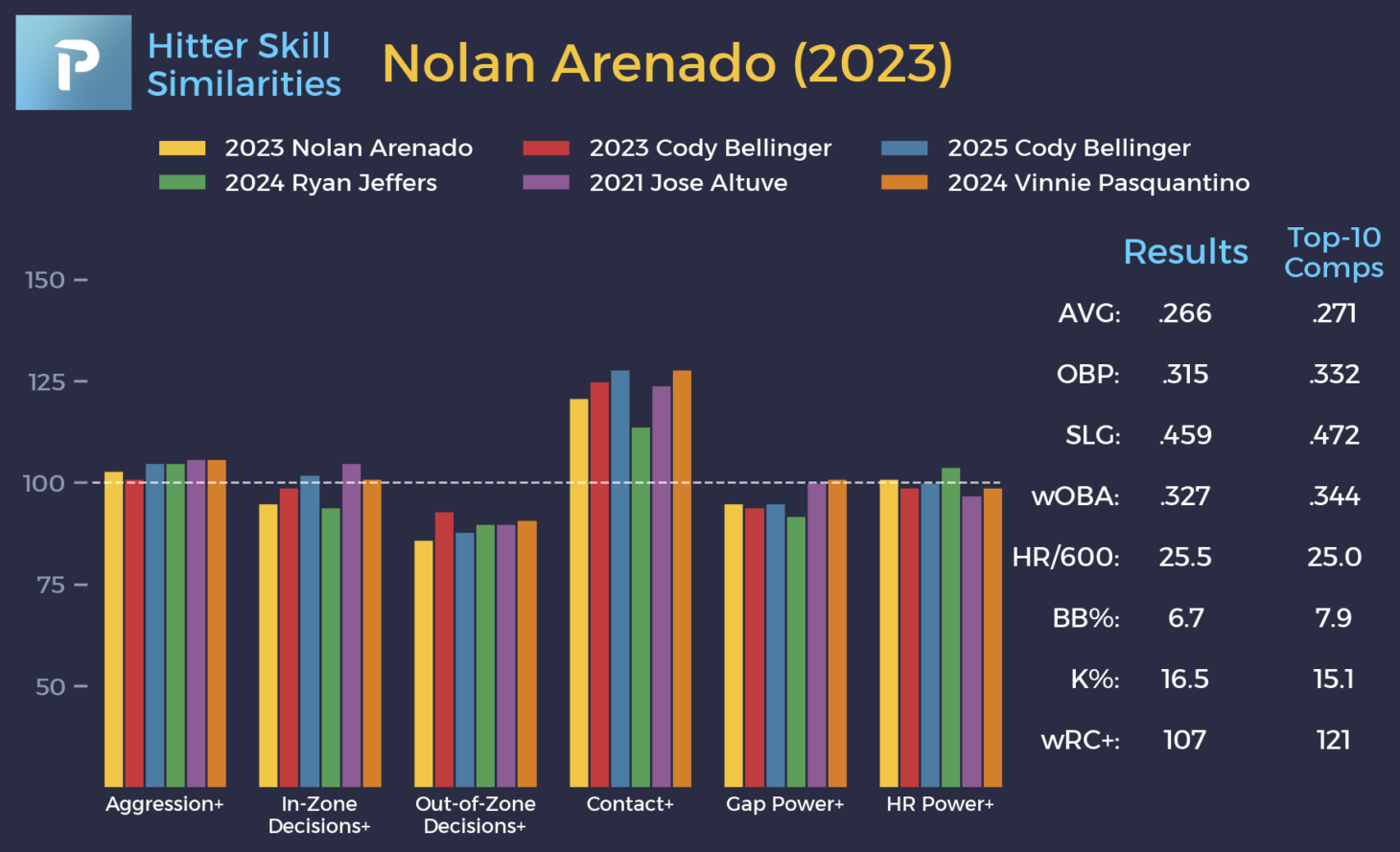
Groover’s path to a breakout starts with the batted-ball profile. If the elevated fly-ball rate sticks, a 20-homer season comes into play. He’s improved his coverage on high pitches in the zone; even when he doesn’t crush them, he can spoil them into playable contact. The line-drive rate has jumped, and the pop-ups have faded into the background as a former flaw. There’s also more athleticism showing up — he’s running more and could realistically settle into the 12–15 steal range. The plate discipline is strong, just not elite. He’ll take his walks and generally avoids prolonged swing-and-miss stretches. Right now, he profiles as a lower-tier starting third baseman, but a bit more juice in the power/speed combo could push him toward the top 10 at the position.
True Projection
LuJames Groover is a contact-oriented hitter with advanced plate discipline and a long track record of high batting averages. His swing thrives on pitches down in the zone, allowing him to use the whole field, and the power has flashed more frequently in recent minor league stops. The concern is the batted-ball mix: too many pop-ups and grounders can cap the home run ceiling. At 6’2″, 212 pounds, he has the physicality to grow into more over-the-fence pop, but his approach leans toward line drives and contact over lift and damage. The swing-and-miss is minimal, and there’s enough emerging athleticism to project double-digit steals with the right opportunities. Overall, Groover may leave you wanting a bit more in the counting categories, but he fits comfortably as a steady corner infielder in deeper formats.
Andrew Fischer, Milwaukee Brewers
Dynasty Floor Comp: Centro on Miami
.301 AVG | 22 HR
Centro’s play has really fallen off over the last few years, and that is reflected in his lower placement in the Miami batting lineup. The batting average appears good, but you have to remember the hitter-friendly environment in this league, where even bunts sometimes fly out of the park. Fischer would never sell himself out like that, so his aggressive tendencies have led to chases out of the zone and a higher strikeout rate. His lineup placement now fluctuates in the SIX-SEVEN range, where he still makes all of the fourth graders chuckle. Miami has really built its lineup around contact hitters, so they are really counting on players like Centro and Fischer to break out of their slumps and turn on the power. Fischer still has the upper-cut hack, but now with better bat tracking technology in the bigs, he will hopefully begin to limit the pop-ups and begin getting on top of the ball better.
Dynasty Ceiling Comp: Rubin on Philly
.318 AVG | 40 HR
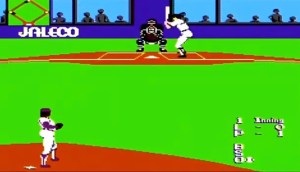
As the fifth hitter, Fischer assumes a prominent role like Rubin in the Philly lineup. Rubin helps clean up any mess that Oko (.360, 40 HR) or Evans (.332, 30 HR) didn’t already handle on the offensive juggernaut that is Philadelphia. For his part, Fischer has adopted a more balanced swing in hopes of driving more balls to all parts of the field. Fortunately, the elite barrel rates have sustained, and he is still able to put up excellent home run rates. He doesn’t have the wheels like Rubin, but Fischer kicks in his fair share of steals every so often. The Brewers have yet to build a Murderer’s Row of batters, but they are content to let Fischer cook from the five spot because even when he doesn’t make contact, he is discerning enough to take a walk.
True Projection
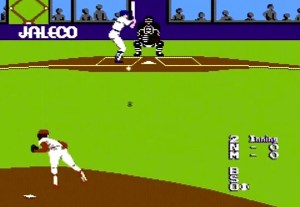
If you’ve ever played Bases Loaded on Nintendo, Andrew Fischer’s batting stance will feel instantly familiar—an intimidating crouch with his chest folded over and the bat calmly pointed back, daring pitchers to challenge him. See Papas from the Los Angeles squad below:
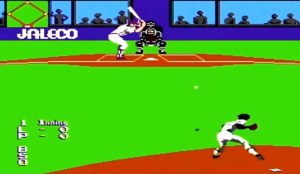
Fischer’s swing is built for damage, featuring extreme loft that makes him a natural fit to clear the short right-field porch at American Family Field. The 6’1” corner infielder backed up that look with production, launching back-to-back 20-homer seasons at Tennessee before being selected 20th overall in the first round of the 2025 draft.
Fischer got a brief taste of High-A and showed more than expected, flashing surprising athleticism with eight stolen bases. While the speed is a nice bonus, it’s the slugger profile that truly stands out. He left the yard just once, but the underlying indicators point to much louder power ahead: a 51% pull rate, 50% fly-ball rate, and 23% line-drive rate all suggest that 2026 could be a big year for his home run totals.
Photo courtesy of respective owners | Adapted by Aaron Polcare (@abeardoesart on Bluesky and X)
